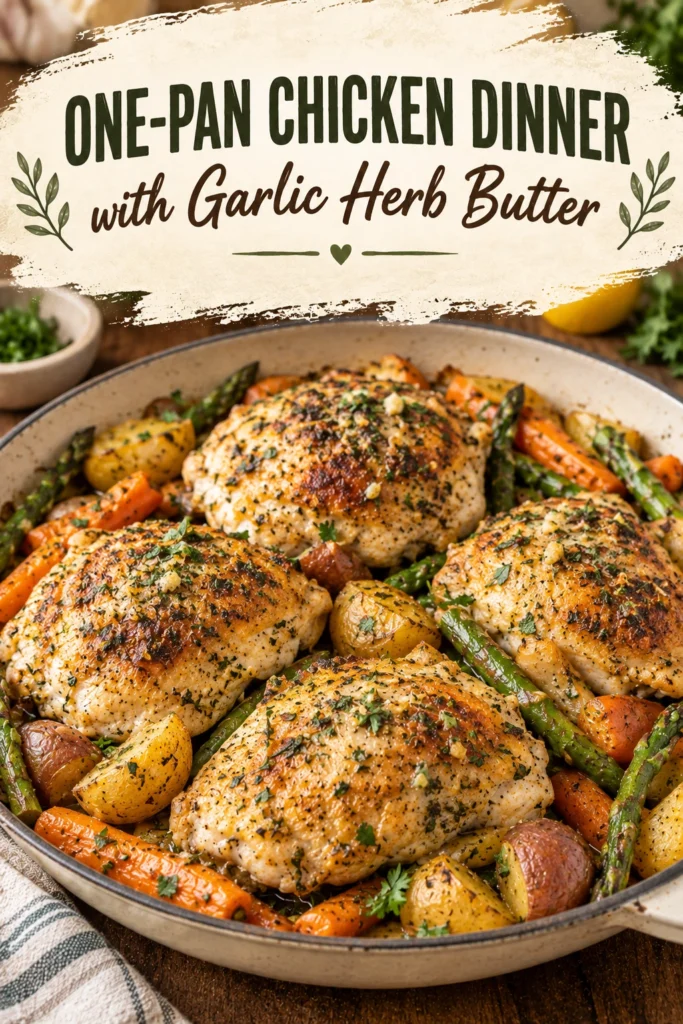
This meal differs from standard roasted chicken by utilizing a focused butter emulsion that bastes the meat and vegetables simultaneously. The result is a glossy, savory coating that penetrates the chicken rather than just sitting on the surface.
It is a complete dinner consisting of seared chicken thighs and seasonal vegetables cooked in a single skillet. The dish balances the richness of butter with the brightness of fresh herbs.
Home cooks appreciate this recipe because it eliminates the need for multiple pots and pans. It provides a high-quality dining experience with minimal effort.
The technique relies on the Maillard reaction, where the chicken skin renders its fat to help roast the vegetables. This creates a deeper flavor profile than boiling or steaming.
Compared to store-bought rotisserie meals, this version offers a customized herb profile and fresh ingredients. You control the salt and fat levels throughout the process.
Anyone from a novice cook to a seasoned parent will find this approach efficient. It scales easily for different family sizes.
The following sections detail the ingredients and steps required to achieve a perfect sear and a velvety sauce.
- ●Why You’ll Love This Recipe
- ●A Brief Background / Why This Recipe Works
- ●Perfect For Busy Weeknights and Family Dinners
- ●Main Ingredient Spotlight: Chicken Thighs
- ●Secondary Ingredient Spotlight: Garlic and Herbs
- ●Key Ingredients
- ●How to Make It
- ●Pro Tips
- ●Delicious Variations
- ●Best Ways to Serve
- ●Storage and Leftovers
- ●Frequently Asked Questions
- ●Why This Recipe Belongs in Your Weekly Rotation
- ●Final Thoughts
This approach to dinner prioritizes flavor density while reducing the time spent at the kitchen sink. It is a reliable method for achieving juicy meat and caramelized vegetables.
- ●Only one skillet is needed for the entire process.
- ●The garlic herb butter creates a restaurant-style glaze.
- ●Chicken thighs remain juicy even under high heat.
- ●Vegetables absorb the rendered chicken fat for better taste.
- ●Preparation time is minimal before the pan takes over.
- ●Fresh herbs provide a vibrant contrast to the rich butter.
- ●The recipe is easily adaptable to whatever vegetables are in the fridge.
- ●Clean-up is fast and straightforward.
- ●It provides a balanced meal of protein and fiber in one go.
- ●The cooking method is consistent and repeatable.
These factors combine to make the meal a practical choice for those who value both taste and time.
A Brief Background / Why This Recipe Works |
The success of this dish lies in the sequential cooking method. chicken first, the pan accumulates rendered fat and browned bits known as fond. This fond acts as a flavor base for the vegetables and the final butter sauce.
Butter contains water and milk solids that brown when heated. When combined with garlic and herbs, these solids create a nutty aroma that complements the savory nature of the roasted chicken.
Using a single pan allows the ingredients to interact. The vegetables steam slightly from the chicken’s moisture while roasting in the fats, resulting in a texture that is tender on the inside and browned on the outside.
This creates a cohesive flavor profile where no single element feels disconnected from the rest of the plate.
Perfect For Busy Weeknights and Family Dinners |
This recipe is ideal for weeknights when time is limited but the desire for a home-cooked meal is high. Since the oven or stovetop does most of the work, you can focus on other tasks while the chicken cooks.
For family dinners, the one-pan format allows for easy serving. You can bring the skillet directly to the table, keeping the food warm and presenting a rustic, appealing look.
Meal prep becomes simpler because the leftovers store well together. You can portion the chicken and vegetables into containers for a balanced lunch the next day.
During smaller holiday gatherings, this dish works as a stress-free main course that pairs well with a simple side salad or crusty bread.
Main Ingredient Spotlight: Chicken Thighs |
Chicken thighs are the preferred choice here because of their higher fat content compared to breasts. This prevents the meat from drying out during the searing and roasting process.
The skin on the thighs provides a critical element: rendered fat. As the skin browns, it releases oil that flavors the vegetables, making them taste more integrated into the dish. If using boneless thighs, the cooking time is shorter, but the flavor remains robust.
Secondary Ingredient Spotlight: Garlic and Herbs |
Fresh garlic provides a pungent, aromatic base that transforms the butter into a savory sauce. When sautéed slowly, the garlic loses its raw bite and becomes sweet and mellow.
Herbs like rosemary, thyme, and parsley add layers of complexity. Rosemary and thyme are hardy and can withstand the heat of the sear, while parsley is added at the end to provide a fresh, grassy finish.
Together, these aromatics cut through the richness of the butter, preventing the dish from feeling too heavy on the palate.
Key Ingredients |
Each component plays a specific role in building the final flavor profile of the meal.
- ●Chicken Thighs — The primary protein providing juiciness and rendered fat.
- ●Unsalted Butter — The base for the sauce that adds richness and helps the garlic brown.
- ●Fresh Garlic — Adds a deep, savory aroma and sharp flavor.
- ●Fresh Thyme — Provides earthy, floral notes that pair well with poultry.
- ●Fresh Rosemary — Adds a woody, pine-like fragrance to the butter.
- ●Fresh Parsley — Used for a bright, clean finish and color.
- ●Carrots — Provide sweetness and a firm texture.
- ●Baby Potatoes — Absorb the butter sauce and add heartiness.
- ●Olive Oil — Used for the initial sear to prevent the butter from burning too quickly.
- ●Salt and Black Pepper — Fundamental seasonings to enhance all other flavors.
How to Make It |
Follow these steps carefully to ensure the chicken is golden and the vegetables are perfectly tender.
- Prepare the chicken: Pat the chicken thighs completely dry with paper towels. Moisture on the skin creates steam, which prevents a crisp brown sear. Season both sides generously with salt and pepper.
- Sear the meat: Heat olive oil in a large oven-safe skillet over medium-high heat. Place the chicken skin-side down and cook for 5 to 7 minutes without moving them. Look for the skin to release easily from the pan and turn a deep golden brown.
- Flip and brown: Turn the chicken over and cook for another 2 to 3 minutes. Remove the chicken from the pan and set it aside on a plate; the meat will not be fully cooked yet, but the exterior will be flavored.
- Sauté the vegetables: Add the chopped carrots and potatoes to the remaining chicken fat in the skillet. Cook for about 5 minutes, stirring occasionally, until the edges start to brown. This step ensures the vegetables have a roasted flavor.
- Create the garlic herb butter: Lower the heat to medium and add the butter to the pan. Once melted, stir in the minced garlic, thyme, and rosemary. Cook for 1 minute until the garlic is fragrant but not brown, as burnt garlic becomes bitter.
- Combine and roast: Return the chicken to the pan, nesting the pieces among the vegetables. Spoon some of the herb butter over the chicken. Transfer the skillet to a preheated oven and roast until the chicken reaches an internal temperature of 165F.
- Final garnish: Remove the pan from the oven and let it rest for five minutes. Sprinkle freshly chopped parsley over the top to add a burst of color and freshness before serving.
1Use these techniques to refine the texture and taste of your dinner.
- ●2Use a Cast Iron Skillet: Heavy pans distribute heat more evenly and provide a superior sear compared to thin stainless steel.
- ●3Don’t Overcrowd the Pan: If the chicken pieces are touching, they will steam instead of brown. Work in batches if necessary.
- ●4Deglaze if Needed: If the browned bits on the bottom look too dark, add a splash of white wine or chicken broth before adding the butter.
- ●5Cut Vegetables Uniformly: Ensure potatoes and carrots are similar in size so they cook through at the same rate.
- ●6Rest the Meat: Allowing the chicken to rest for a few minutes keeps the juices inside the meat rather than on the plate.
Delicious Variations |
You can modify this recipe to suit different dietary needs or seasonal availability.
- ●Seasonal Veggie Swap: Use Brussels sprouts and parsnips during the winter months for a heartier profile.
- ●Lemon Twist: Stir in a tablespoon of fresh lemon juice and zest at the end to brighten the richness of the butter.
- ●Low Carb Version: Replace the potatoes with cauliflower florets or radishes.
- ●Spicy Kick: Add a pinch of red pepper flakes to the garlic butter for a subtle heat.
- ●Creamy Finish: Stir in two tablespoons of heavy cream at the very end for a thicker, more luxurious sauce.
These changes allow the recipe to evolve while maintaining the core garlic butter technique.
Best Ways to Serve |
While the pan contains a full meal, a few additions can elevate the presentation.
- ●Serve with a side of steamed green beans or a crisp arugula salad.
- ●Pair with a toasted baguette to soak up the excess herb butter.
- ●Offer a wedge of fresh lemon for squeezing over the chicken.
- ●Accompany with a glass of chilled Chardonnay or a light Pinot Noir.
For a more formal presentation, remove the chicken and vegetables and place them on a warmed platter. Pour the remaining pan sauce over the top just before bringing it to the table.
If you enjoy similar flavors, you might like the Flavorful Garlic Butter Chicken Bowl With Roasted Carrots or the One Pan Salmon Dinner With Garlic Butter Easy Healthy Weeknight Meal for more one-pan inspiration.
Storage and Leftovers |
Refrigerating
Place the chicken and vegetables in an airtight container. They will remain fresh in the refrigerator for up to 3 to 4 days.
Reheating
Reheat in an oven at 350F or in a skillet over medium heat. Adding a small knob of butter or a teaspoon of water prevents the meat from drying out during the process.
Freezing
The cooked chicken and vegetables can be frozen for up to 2 months. Thaw completely in the refrigerator before reheating to maintain the best texture.
Frequently Asked Questions |
- ●Q: Can I use chicken breasts instead of thighs?
A: Yes, you can use breasts, but be careful not to overcook them. Breasts lack the fat of thighs and can dry out quickly in the oven. Reduce the roasting time and use a meat thermometer to pull them out exactly at 165F. - ●Q: What can I use if I do not have fresh herbs?
A: Dried herbs are a viable substitute, but use them in smaller quantities. Generally, one teaspoon of dried herbs equals one tablespoon of fresh. Add dried herbs earlier in the process so they have time to rehydrate in the butter. - ●Q: Why did my garlic burn even on medium heat?
A: Garlic burns quickly if the pan is too hot or if the pieces are minced too finely. Ensure the butter has melted and slightly cooled before adding the garlic, and stir constantly to move the bits around. - ●Q: Do the potatoes need to be parboiled first?
A: No, parboiling is not necessary if you cut the potatoes into small, bite-sized pieces. The combination of the initial sauté and the oven roasting time is sufficient to make them tender and golden. - ●Q: Is it possible to make this recipe dairy-free?
A: You can replace the butter with a high-quality plant-based butter or a combination of olive oil and a pinch of nutritional yeast for a savory flavor. The texture will be slightly thinner, but the garlic and herb notes remain. - ●Q: How do I know when the chicken is safely cooked?
A: The most reliable method is using an instant-read meat thermometer. Insert it into the thickest part of the thigh, avoiding the bone. It is safe to eat once it reaches a steady 165F.
Why This Recipe Belongs in Your Weekly Rotation |
This meal solves the common dilemma of wanting a gourmet dinner without spending hours on preparation and cleanup. The combination of high-heat searing and slow roasting creates a professional result that is accessible to anyone.
The versatility of the vegetables means you can adapt the dish to whatever is in your pantry, reducing food waste. It provides a reliable source of protein and nutrients in a single vessel.
Integrating this into your routine simplifies your evenings while ensuring you do not rely on processed alternatives. It is a timeless combination of flavors that appeals to almost every palate.
Final Thoughts |
This one-pan chicken dinner combines the richness of garlic herb butter with the convenience of a single-skillet meal. the sear and the roast, you create a dish with depth and texture.
It is an ideal choice for anyone looking to streamline their kitchen workflow without sacrificing the quality of their food. The result is a comforting, satisfying dinner that feels special every time.
Gather your ingredients and bring this aromatic, golden-brown meal to your table tonight.

One-Pan Chicken Dinner with Garlic Herb Butter
- Prep Time: 15 minutes
- Cook Time: 35 minutes
- Total Time: 50 minutes
- Yield: 4 servings 1x
- Category: Dinner
- Method: Searing and Baking
- Cuisine: American
Description
Juicy chicken thighs and roasted vegetables coated in a rich, aromatic garlic herb butter sauce, all cooked in one skillet for easy cleanup.
Ingredients
- 4 bone-in, skin-on chicken thighs
- 4 tablespoons unsalted butter
- 2 tablespoons olive oil
- 4 cloves garlic, minced
- 1 tablespoon fresh thyme leaves
- 1 tablespoon fresh rosemary, chopped
- 2 cups baby potatoes, halved
- 2 carrots, sliced into rounds
- 1 tablespoon fresh parsley, chopped
- Salt and black pepper to taste
Instructions
- Preheat your oven to 400F (200C).
- Pat chicken thighs dry with paper towels and season both sides with salt and pepper.
- Heat olive oil in a large oven-safe skillet over medium-high heat.
- Place chicken skin-side down and sear for 5-7 minutes until the skin is golden brown and crisp.
- Flip the chicken and sear for another 2-3 minutes, then remove the chicken from the pan and set aside.
- Add baby potatoes and carrots to the skillet, sautéing for 5 minutes until slightly browned.
- Lower heat to medium and add butter. Once melted, stir in minced garlic, thyme, and rosemary for 1 minute.
- Place the chicken back into the pan, nesting them among the vegetables.
- Transfer the skillet to the oven and roast for 15-20 minutes, or until chicken reaches an internal temperature of 165F.
- Remove from oven, sprinkle with fresh parsley, and let rest for 5 minutes before serving.