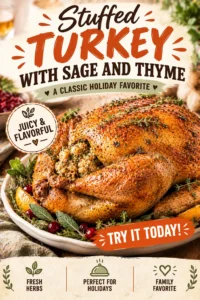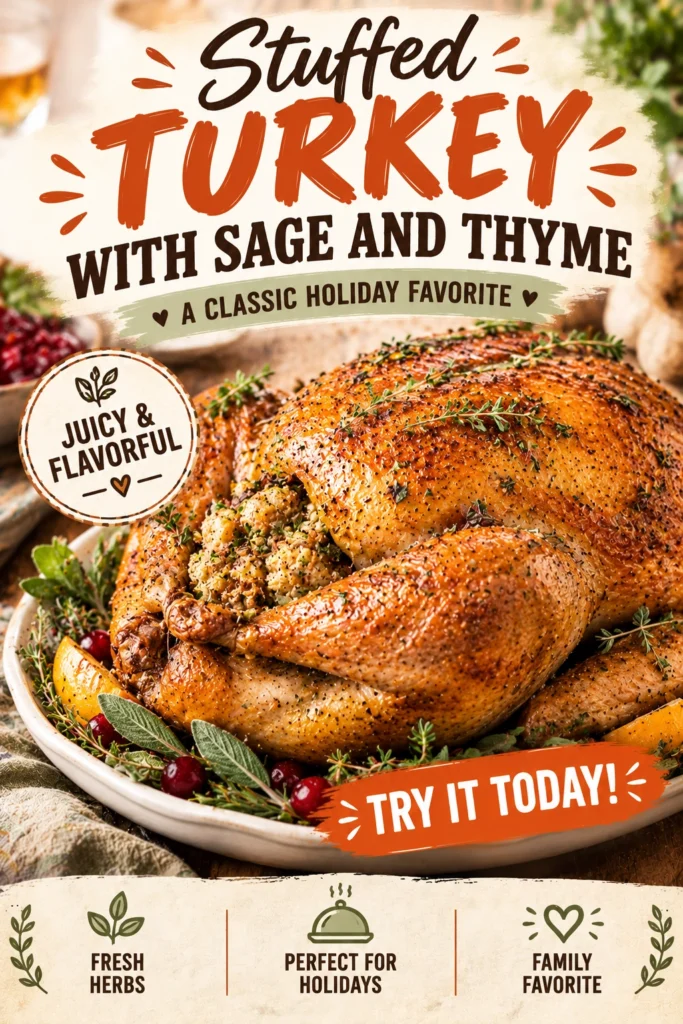
A perfectly roasted turkey is the center of many celebratory meals, but the goal is always to avoid dry meat. This recipe focuses on maintaining moisture through a fragrant herb stuffing that steams from the inside out.
This dish is a whole turkey stuffed with a blend of aromatic herbs, breadcrumbs, and savory vegetables. It creates a complete meal within a single bird, simplifying the cooking process.
Home cooks appreciate this version because it avoids the complexity of professional catering while delivering deep, earthy flavors. The sage and thyme penetrate the meat, removing the blandness often found in basic roasts.
The recipe stands out heavy, savory notes of the stuffing with the bright, clean scent of fresh herbs. It differs from store-bought pre-stuffed birds , whole ingredients without preservatives.
Anyone looking to master a centerpiece meal for a family gathering will find this approach manageable. It provides clear indicators for doneness to remove the guesswork from the oven.
The finished bird offers a satisfying contrast between the crisp, salty skin and the soft, moist texture of the herb stuffing.
The following guide explains how to prepare and roast this bird to perfection.
- ●Why You’ll Love This Recipe
- ●A Brief Background on Herb-Stuffed Turkey
- ●Perfect For Festive Family Gatherings
- ●Turkey Ingredient Spotlight
- ●Sage and Thyme Ingredient Spotlight
- ●Key Ingredients
- ●How to Make It
- ●Pro Tips
- ●Delicious Variations
- ●Best Ways to Serve
- ●Storage and Leftovers
- ●Frequently Asked Questions
- ●Why This Recipe Belongs in Your Weekly Rotation
- ●Final Thoughts
This approach to roasting turkey prioritizes flavor infusion and texture, ensuring the meat remains tender throughout the long cook time.
- ●The stuffing acts as an internal moisture reservoir for the breast meat.
- ●Fresh sage and thyme provide a classic, aromatic profile that smells like a professional kitchen.
- ●Using a single roasting pan reduces the amount of cleanup required after the meal.
- ●The recipe scales easily depending on the weight of the bird.
- ●It incorporates a basting technique that creates a deep mahogany skin.
- ●The stuffing provides a built-in side dish that complements the meat.
- ●Clear internal temperature targets prevent the common mistake of overcooking.
- ●Fresh herbs offer a cleaner, more vibrant taste than dried alternatives.
- ●The preparation allows for most of the work to be done before guests arrive.
These elements combine to create a roast that is reliable and impressive without requiring advanced culinary training.
A Brief Background on Herb-Stuffed Turkey |
Stuffing a bird is a traditional method used to add flavor and bulk to a meal. By placing a mixture of aromatics inside the cavity, the meat absorbs the essence of the herbs as the heat circulates.
Sage and thyme are the gold standard for poultry because their earthy, slightly peppery notes cut through the richness of the turkey fat. This pairing creates a scent that is synonymous with autumn and winter celebrations.
Modern roasting techniques emphasize the importance of the resting period, allowing juices to redistribute. This prevents the meat from leaking all its moisture onto the platter when sliced.
This specific combination of herbs and a bread-based stuffing ensures a balanced meal that feels both nostalgic and refined.
Perfect For Festive Family Gatherings |
This recipe is designed for large groups where a single, impressive main course is needed. The size of a whole turkey makes it the natural choice for holiday dinners or milestone celebrations.
Because the stuffing is contained within the bird, it streamlines the oven space, leaving room for other sides like Sage Cornbread Stuffing With Cranberry And Orange Easy Thanksgiving Side Dish or roasted vegetables.
It also works well for those who enjoy meal prepping for the week, as a single turkey provides enough protein for multiple different leftovers, from sandwiches to soups.
Turkey Ingredient Spotlight |
Turkey is the primary protein, chosen for its mild flavor and ability to absorb strong aromatics. The breast provides lean meat, while the dark meat in the legs and thighs adds richness and depth.
Selecting a bird that is properly thawed is essential for even cooking. A frozen turkey that is not fully thawed will result in a burnt exterior and a raw center, which is a safety risk.
Sage and Thyme Ingredient Spotlight |
Sage brings a bold, slightly minty and earthy flavor that defines the traditional roast profile. It is potent, so it balances the heavier fats of the turkey skin.
Thyme adds a subtle, lemony floral note that lightens the overall flavor palette. Together, these herbs create a complex aromatic layer that permeates both the skin and the internal stuffing.
Fresh herbs are preferred over dried because they contain volatile oils that release more fragrance during the roasting process.
Key Ingredients |
The following components are necessary to achieve the correct flavor balance and texture.
- ●Whole Turkey — The main protein and vessel for the stuffing.
- ●Fresh Sage — Provides the dominant earthy, herbal note.
- ●Fresh Thyme — Adds a subtle, aromatic floral sweetness.
- ●Unsalted Butter — Used for basting and rubbing the skin for golden color.
- ●Breadcrumbs — The base of the stuffing that absorbs the turkey juices.
- ●Onion and Celery — Aromatics that add depth and texture to the filling.
- ●Garlic — Enhances the savory profile of the meat and stuffing.
- ●Salt and Black Pepper — Essential for seasoning both the cavity and the skin.
How to Make It |
Follow these steps carefully to ensure the turkey is cooked through and the skin is crisp.
- Prepare the bird: Remove the giblets from the cavity and pat the skin completely dry with paper towels. Moisture on the skin creates steam, which prevents the skin from browning and becoming crisp.
- Season the cavity: Rub a generous amount of salt and pepper inside the turkey cavity. This ensures the meat is seasoned from the inside out, avoiding a bland center.
- Create the herb stuffing: Sauté diced onions, celery, and garlic in butter until softened, then stir in chopped sage, thyme, and breadcrumbs. Cook until the mixture is fragrant and moist, but avoid over-cooking the breadcrumbs into a hard crust.
- Stuff the turkey: Spoon the stuffing loosely into the cavity, leaving a small amount of space at the top. Packing the stuffing too tightly can prevent heat from circulating, which may lead to the stuffing not reaching a safe internal temperature.
- Apply the herb butter: Mix softened butter with minced sage and thyme, then rub it under the skin of the breast and all over the exterior. This protects the breast meat from drying out and creates a flavorful, golden-brown crust.
- Roast the turkey: Place the bird on a rack in a roasting pan and cook in a preheated oven. Rotate the pan halfway through if your oven has hot spots to ensure an even color across the whole bird.
- Baste for moisture: Every hour, spoon the pan juices over the breast and legs. This adds a layer of gloss to the skin and keeps the surface from scorching.
- Check for doneness: Insert a meat thermometer into the thickest part of the thigh without hitting the bone. The turkey is done when the thigh reaches 165F; pulling it too early can be unsafe, while waiting too long makes the meat dry.
- Rest the meat: Remove the turkey from the oven and let it sit on a carving board for at least 30 minutes. Cutting into the meat immediately causes the juices to run out, leaving the slices dry.
1These small adjustments can significantly improve the final result of your roast.
- ●2Dry brine the bird: Salt the turkey 24 hours in advance to draw moisture out of the skin and season the meat deeply.
- ●3Use a roasting rack: Lifting the bird off the bottom of the pan allows hot air to circulate underneath, preventing a soggy bottom.
- ●4Avoid overstuffing: Keep the stuffing loose so it can heat through quickly and evenly.
- ●5Cover the wings: Wrap the wing tips in small pieces of foil to prevent them from burning before the rest of the bird is done.
- ●6Use a digital thermometer: Relying on a timer is risky because every oven and every bird is different; temperature is the only accurate measure.
Delicious Variations |
You can adapt this recipe to suit different tastes or dietary needs with these simple swaps.
- ●Apple and Cranberry: Add diced Granny Smith apples and dried cranberries to the stuffing for a sweet-tart contrast.
- ●Chestnut and Sage: Replace half the breadcrumbs with roasted chestnuts for a richer, nuttier flavor.
- ●Lemon and Rosemary: Swap the sage for fresh rosemary and add lemon zest to the butter rub for a brighter, Mediterranean profile.
- ●Gluten-Free: Use certified gluten-free breadcrumbs or a mix of quinoa and wild rice for the stuffing.
- ●Garlic-Heavy: Roast a whole head of garlic in the pan alongside the turkey and mash it into the gravy.
These variations allow you to move from a traditional flavor profile to something more contemporary depending on the occasion.
Best Ways to Serve |
The richness of the herb-stuffed turkey pairs best with sides that offer acidity or creaminess to balance the plate.
- ●Serve with a side of tart cranberry sauce to cut through the savory fat.
- ●Pair with Creamy Sweet Potato Soup With Thyme And Parmesan Easy Healthy Fall Soup Recipe for a comforting start to the meal.
- ●Include a platter of steamed green beans or roasted Brussels sprouts for a fresh, crisp element.
- ●Offer a rich turkey gravy made from the pan drippings to pour over the sliced meat and stuffing.
Plating the turkey on a large wooden board with garnished herbs makes for an impressive presentation. Surround the carved meat with the scooped-out stuffing to showcase the center of the dish.
For a more casual approach, serve slices of turkey with a side of mashed potatoes and a simple garden salad.
Storage and Leftovers |
Refrigerating
Store leftover turkey and stuffing in airtight containers in the refrigerator for up to 3 to 4 days. Keep the meat and stuffing in separate containers to maintain their individual textures.
Reheating
Reheat slices of turkey in a covered dish with a splash of broth at 325F until warmed through. This prevents the oven from drying out the meat during the second heating.
Freezing
Freeze cooked turkey and stuffing in vacuum-sealed bags or heavy-duty freezer bags for up to 3 months. Thaw completely in the refrigerator before reheating.
Frequently Asked Questions |
- ●Q: How do I know when the stuffing inside is safe to eat?A: You must use a meat thermometer to ensure the center of the stuffing reaches 165F. Because the stuffing is insulated , it can remain undercooked even when the turkey skin looks brown. If the turkey is done but the stuffing is not, remove the stuffing and heat it separately in a dish.
- ●Q: Can I use dried herbs if I cannot find fresh sage and thyme?A: You can use dried herbs, but use only one-third of the amount called for in the recipe because dried herbs are more concentrated. Rub the dried herbs between your palms before adding them to release the oils. However, fresh herbs provide a more vibrant color and a cleaner scent.
- ●Q: What should I do if the breast is browning too quickly?A: If the skin is getting too dark before the thighs reach 165F, loosely tent a piece of aluminum foil over the breast. This blocks direct heat from the top of the oven while allowing the rest of the bird to continue cooking. Check the temperature every 20 minutes once the foil is applied.
- ●Q: Can I roast a stuffed turkey in a slow cooker?A: A whole stuffed turkey is generally too large for most slow cookers and will not brown the skin. For a similar flavor in a smaller appliance, try a Slow Cooker Turkey Tenderloin With Garlic And Herbs Healthy Dinner Idea. Slow cookers are better for smaller cuts of meat.
- ●Q: Why is my turkey skin not getting crispy?A: The most common reason is excess moisture on the skin or basting too frequently with liquid. Ensure the turkey is patted dry before roasting and avoid using too much water in the pan. A high-fat butter rub also helps the skin fry and crisp up in the oven heat.
- ●Q: Is it safe to leave the stuffing in the bird while it rests?A: Yes, leaving the stuffing in during the resting period is fine and actually helps keep the breast meat warm. However, you should remove the stuffing once you are ready to carve so you can serve it as a side dish. The carry-over heat will continue to cook the stuffing slightly.
Why This Recipe Belongs in Your Weekly Rotation |
While a whole turkey is often reserved for holidays, the techniques used here can be applied to smaller birds or during special family Sundays. It teaches the fundamental skill of roasting and stuffing, which can be adapted to chicken or duck.
The ability to create a high-protein main and a side dish in one pan reduces the stress of coordinating multiple oven timers. It provides a wholesome, homemade alternative to processed meats and frozen dinners.
Integrating fresh herbs like sage and thyme into your cooking routine adds a level of sophistication to basic proteins. This recipe transforms a simple bird into a fragrant, multi-textured meal that feels special every time it is served.
Final Thoughts |
Stuffed Turkey with Sage and Thyme is a balanced roast that emphasizes moisture and aromatic depth. By combining a savory herb stuffing with a careful basting process, you achieve a result that is both tender and visually appealing.
This recipe is an ideal choice for anyone wanting to bring a traditional, comforting meal to the table without the fear of dry meat. It simplifies the process through clear temperature markers and practical preparation steps.
Gather your ingredients and bring the scent of fresh herbs into your home impressive bird today.

Stuffed Turkey with Sage and Thyme
- Prep Time: 45 minutes
- Cook Time: 3-4 hours
- Total Time: 0 hours
- Yield: 10-12 servings 1x
- Category: Dinner
- Method: Roasting
- Cuisine: American
Description
A whole roasted turkey stuffed with a savory blend of sage, thyme, and breadcrumbs, featuring a crisp herb-butter skin.
Ingredients
- 12–14 lb whole turkey, thawed
- 1/2 cup unsalted butter, softened
- 2 tablespoons fresh sage, minced
- 2 tablespoons fresh thyme, minced
- 2 cups dried breadcrumbs
- 1 medium onion, finely diced
- 2 stalks celery, finely diced
- 3 cloves garlic, minced
- 2 tablespoons olive oil
- 2 teaspoons salt
- 1 teaspoon black pepper
Instructions
- Preheat oven to 325F (165C).
- Remove giblets and pat the turkey skin completely dry with paper towels.
- Season the inside of the cavity with 1 teaspoon of salt and 1/2 teaspoon of pepper.
- Heat olive oil in a skillet over medium heat; sauté onion, celery, and garlic until translucent.
- Stir in minced sage, thyme, and breadcrumbs, cooking for 2-3 minutes until fragrant.
- Loosely fill the turkey cavity with the prepared stuffing mixture.
- Mix softened butter with remaining sage and thyme. Rub this mixture under the breast skin and all over the exterior of the turkey.
- Season the exterior of the bird with the remaining salt and pepper.
- Place turkey on a rack in a roasting pan and roast until a meat thermometer reaches 165F in the thickest part of the thigh.
- Baste with pan drippings every hour during the roasting process.
- Remove from oven and let the turkey rest for 30 minutes before carving.