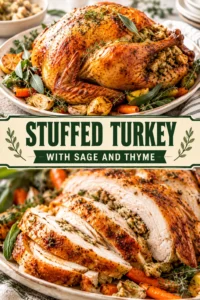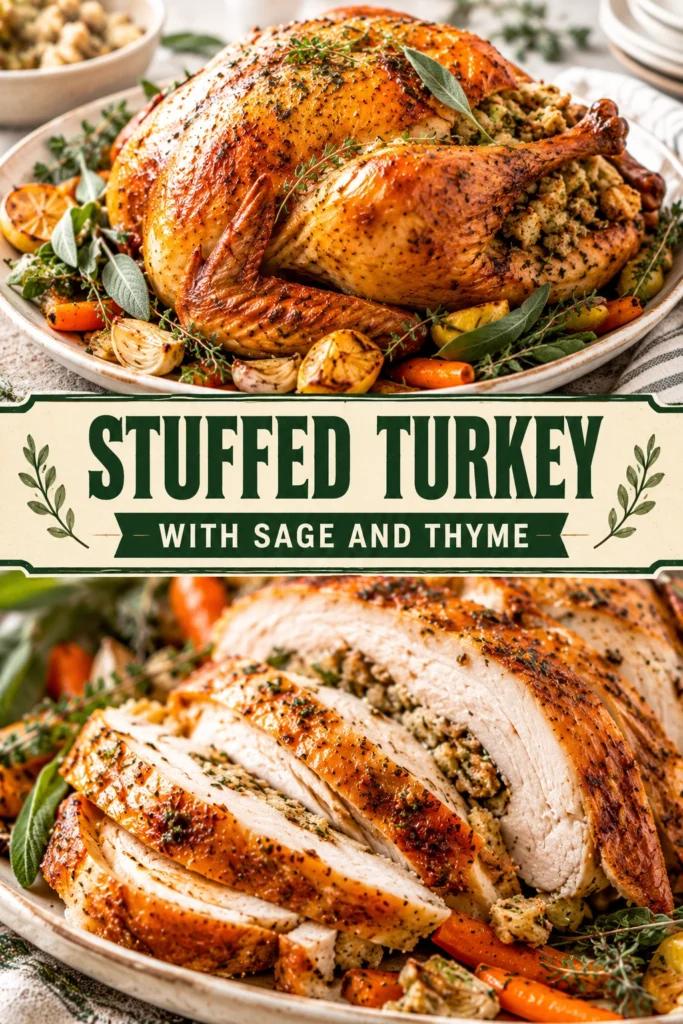
A whole turkey roasting in the oven fills the entire house with a scent that signals a celebration. The way the skin turns a deep mahogany brown while the interior stays moist is the hallmark of a successful roast.
This preparation focuses on a Stuffed Turkey with Sage and Thyme, blending earthy aromatics with a savory bread-based filling. It provides a complete meal centered around a single bird.
Home cooks appreciate this version because it balances the lean nature of turkey with a moist stuffing that absorbs the natural juices during the roasting process.
The specific combination of fresh sage and woody thyme creates a profile that is traditional yet refined, avoiding the overly salty taste found in many pre-packaged stuffing mixes.
Unlike store-bought options, using fresh herbs and homemade stuffing allows for total control over the seasoning and texture of the final dish.
This recipe serves as an ideal centerpiece for those hosting large family gatherings or anyone wanting to master the art of the holiday roast.
Following these steps ensures a bird that is cooked through without drying out the breast meat.
- ●Why You’ll Love This Recipe
- ●A Brief Background on Why This Works
- ●Perfect For Festive Gatherings and Holiday Hosting
- ●Turkey Spotlight
- ●Herbs and Aromatics Spotlight
- ●Key Ingredients
- ●How to Make It
- ●Pro Tips
- ●Delicious Variations
- ●Best Ways to Serve
- ●Storage and Leftovers
- ●Frequently Asked Questions
- ●Why This Recipe Belongs in Your Weekly Rotation
- ●Final Thoughts
Creating a centerpiece roast can feel intimidating, but this method simplifies the process while delivering professional results.
- ●Fresh sage and thyme provide a sophisticated, earthy aroma.
- ●The stuffing stays moist turkey’s drippings.
- ●A single roasting pan reduces the amount of cleanup required.
- ●The skin achieves a crisp, golden-brown texture through butter basting.
- ●It scales easily for different group sizes depending on the turkey weight.
- ●Fresh herbs offer a cleaner taste than dried alternatives.
- ●The internal stuffing helps the turkey maintain its shape while roasting.
- ●It creates a cohesive flavor profile where the bird and filling complement each other.
- ●The recipe uses accessible ingredients found in most grocery stores.
- ●It serves as a reliable anchor for a larger festive menu.
This approach turns a potentially stressful cooking task into a manageable and rewarding experience.
A Brief Background on Why This Works |
The success of a stuffed turkey depends on the heat distribution between the exterior meat and the dense interior filling. By using a combination of sage and thyme, the flavor penetrates both the skin and the stuffing, creating a unified taste.
Butter serves as the primary fat source, which helps conduct heat across the skin for a better sear. The inclusion of aromatic vegetables in the stuffing provides moisture, preventing the bread from becoming too dry during the long roasting period.
Allowing the turkey to rest after leaving the oven lets the juices redistribute, which is the difference between a dry bird and a succulent one.
Perfect For Festive Gatherings and Holiday Hosting |
Large family dinners require dishes that can be prepared in bulk without sacrificing quality. This roast provides a massive amount of protein and a side dish in one, making it a practical choice for crowds.
Holiday hosting often involves managing multiple timers. Because the turkey spends several hours in the oven, it frees up stove space for other sides like Sage Cornbread Stuffing With Cranberry And Orange Easy Thanksgiving Side Dish or roasted vegetables.
For those who enjoy meal prep, a large turkey provides a wealth of leftovers that can be repurposed into sandwiches, soups, or salads for the following week.
Turkey Spotlight |
Turkey is chosen for its mild flavor and substantial size, making it the ultimate canvas for herbs. The breast provides lean protein, while the dark meat in the legs and thighs offers a richer taste and more moisture.
When roasted slowly, the turkey develops a deep savoriness that pairs perfectly with the acidity of cranberry sauce or the creaminess of Creamy Sweet Potato Soup With Thyme And Parmesan Easy Healthy Fall Soup Recipe
Herbs and Aromatics Spotlight |
Sage and thyme are the defining elements of this recipe. Sage has a slightly peppery, citrusy note that cuts through the richness of the turkey fat, while thyme adds a subtle, woody sweetness.
These herbs work together to create a classic “autumn” flavor profile. Using them both in the stuffing and rubbed on the skin ensures that the aromatic experience is consistent from the first slice to the last bite.
When combined with garlic and onion, these herbs form a savory base that elevates the naturally mild flavor of the poultry.
Key Ingredients |
Quality ingredients are the foundation of a great roast, focusing on fresh produce and high-fat butter.
- ●Whole Turkey — The primary protein that provides the structure and main flavor of the meal.
- ●Unsalted Butter — Used for basting the skin to achieve a golden color and adding richness to the stuffing.
- ●Fresh Sage — Provides a pungent, earthy aroma that is characteristic of traditional holiday roasts.
- ●Fresh Thyme — Adds a subtle, lemony, and woody note to the meat and filling.
- ●Bread Cubes — The base of the stuffing that absorbs juices and provides a satisfying texture.
- ●Celery — Adds a fresh, salty crunch to the stuffing mixture.
- ●Onion — Provides a sweet, aromatic depth when sautéed with the herbs.
- ●Garlic — Adds a sharp, savory punch that enhances the overall flavor profile.
- ●Chicken Broth — Moistens the bread cubes to prevent the stuffing from drying out in the oven.
- ●Salt and Black Pepper — Essential seasonings that enhance the natural flavors of the turkey and herbs.
How to Make It |
Proper preparation and temperature control are the keys to a perfectly cooked stuffed turkey.
- Prepare the stuffing: Sauté diced onion, celery, and garlic in butter until softened and translucent. Stir in chopped sage and thyme, then remove from heat and mix with bread cubes and chicken broth until moist but not soggy. A common mistake is adding too much broth, which results in a mushy stuffing rather than a fluffy one.
- Prepare the turkey: Remove the giblets from the cavity and pat the skin completely dry with paper towels. Dry skin is essential for achieving a crisp, golden-brown finish; if the skin is damp, it will steam instead of sear.
- Season the cavity: Generously sprinkle salt and black pepper inside the turkey cavity. This ensures the meat closest to the stuffing is well-seasoned from the inside out.
- Stuff the bird: Spoon the herb stuffing into the cavity, pressing it in firmly but not packing it so tightly that air cannot circulate. Overfilling can lead to uneven cooking, where the outside of the stuffing is done but the center remains raw.
- Apply the herb butter: Mix softened butter with minced sage, thyme, salt, and pepper. Rub this mixture under the skin of the breast and all over the exterior. This protects the breast meat from drying out and imparts flavor directly into the skin.
- Roast the turkey: Place the turkey on a rack in a roasting pan and cook in a preheated oven. Baste the bird every hour with the pan drippings to maintain moisture and enhance the browning process.
- Check for doneness: Use a meat thermometer to ensure the thickest part of the breast reaches 165°F and the stuffing reaches 165°F. Avoid relying on the “pop-up” timer, as these can be inconsistent and often trigger after the meat is already overcooked.
- Rest the meat: Transfer the turkey to a carving board and let it sit for at least 30 to 45 minutes before slicing. This allows the juices to settle back into the meat, ensuring every slice is moist.
1Small adjustments in technique can significantly improve the final quality of the roast.
- ●2Brine the turkey for 12 to 24 hours before roasting to increase moisture retention in the breast meat.
- ●3Use a roasting rack to lift the bird off the bottom of the pan, allowing hot air to circulate underneath for even cooking.
- ●4Tuck the wing tips under the body or cover them with foil to prevent them from burning before the rest of the bird is done.
- ●5Measure stuffing temperature specifically, as it must reach 165°F to be safe to eat, regardless of the meat’s temperature.
- ●6Use fresh herbs instead of dried ones for a more vibrant, aromatic profile that doesn’t taste dusty.
Delicious Variations |
While sage and thyme are classic, these twists can adapt the recipe for different tastes or dietary needs.
- ●Apple and Cranberry: Add diced Granny Smith apples and dried cranberries to the stuffing for a sweet-tart contrast.
- ●Chestnut and Mushroom: Incorporate sautéed mushrooms and roasted chestnuts for a deeper, earthier flavor.
- ●Gluten-Free Option: Replace the wheat bread cubes with a certified gluten-free bread or a mixture of cooked quinoa and cornmeal.
- ●Citrus Infusion: Place half an onion, a lemon half, and an orange half inside the cavity along with the stuffing for a bright, zesty aroma.
- ●Garlic-Heavy Roast: Increase the garlic in the herb butter and add several whole cloves inside the cavity for a bold, savory punch.
These modifications allow the recipe to fit different seasonal themes or specific dietary restrictions.
Best Ways to Serve |
A stuffed turkey is a heavy dish that benefits from bright, acidic, or creamy accompaniments.
- ●Serve with a side of tart cranberry sauce to balance the richness of the butter and herbs.
- ●Pair with steamed green beans or honey-glazed carrots for a pop of color and freshness.
- ●Offer a side of creamy mashed potatoes to soak up the extra pan gravy.
- ●Accompany with a light arugula salad with a lemon vinaigrette to cleanse the palate.
When carving, slice the breast meat across the grain to ensure the most tender texture. Scoop the stuffing out carefully and serve it in a separate bowl or alongside the meat slices.
If you have extra turkey and are looking for other ways to use poultry, consider trying a Quick Ground Turkey And Zucchini Skillet Recipe for a lighter weekday meal.
Storage and Leftovers |
Refrigerating
Store sliced turkey and stuffing in airtight containers in the fridge for up to 3 to 4 days. Keep the meat and stuffing in separate containers to maintain their individual textures.
Reheating
Reheat slices of turkey in the oven at 325°F covered with foil or in a skillet with a splash of broth to prevent drying. Heat stuffing in a small baking dish until it reaches an internal temperature of 165°F.
Freezing
Freeze cooked turkey and stuffing in vacuum-sealed bags or heavy-duty freezer bags for up to 3 months. Thaw slowly in the refrigerator for 24 hours before reheating to maintain the best quality.
Frequently Asked Questions |
- ●Q: How do I know when the stuffing inside the turkey is safely cooked?
A: You must use a digital meat thermometer to check the center of the stuffing. It is not enough for the meat to be done; the stuffing must reach a minimum internal temperature of 165°F to ensure that any bacteria from the raw poultry have been eliminated. - ●Q: Can I make the stuffing ahead of time?
A: Yes, you can prepare the stuffing components and mix them a day in advance. However, avoid letting the stuffing sit in liquid for too long, or the bread will become overly saturated, which may prevent it from browning properly inside the bird. - ●Q: What should I do if the breast meat is browning too quickly?
A: If the skin is getting too dark before the internal temperature is reached, loosely cover the breast area with a piece of aluminum foil. This creates a shield that stops the direct heat from burning the skin while the rest of the bird finishes cooking. - ●Q: Do I really need to let the turkey rest for 30 minutes?
A: Resting is a critical step because it allows the muscle fibers to relax and reabsorb the juices. If you carve the turkey immediately after taking it out of the oven, the juices will run out onto the board, leaving the meat dry and tasteless. - ●Q: Is it safer to cook the stuffing separately?
A: Some people prefer cooking stuffing in a separate pan to avoid the risk of undercooking the center. While stuffing inside the bird provides great flavor, a separate dish allows for more precise temperature control and a crispier top crust on the bread.
Why This Recipe Belongs in Your Weekly Rotation |
While a whole turkey is often reserved for holidays, the techniques used here can be applied to smaller birds or roast chickens for Sunday dinners. The combination of sage and thyme is a timeless pairing that brings a sense of warmth and comfort to any meal.
This recipe encourages a slower pace of cooking, focusing on the sensory experience of aromas and textures. It provides a high-protein centerpiece that feeds a crowd and leaves behind enough leftovers to simplify several subsequent meals.
Integrating this roast into your repertoire ensures you are always prepared for unexpected guests or festive occasions with a dish that is both impressive and delicious.
Final Thoughts |
This Stuffed Turkey with Sage and Thyme combines a juicy, herb-rubbed bird with a savory, moisture-rich stuffing. basting and resting guidelines, anyone can achieve a professional-grade roast at home.
The ease of combining the protein and the side dish into one pan makes it a practical choice for those who want a high-impact meal without excessive kitchen chaos.
Gather your favorite people around the table and enjoy the timeless flavor of this aromatic holiday classic.

Stuffed Turkey with Sage and Thyme
- Prep Time: 45 minutes
- Cook Time: 3 to 4 hours
- Total Time: 0 hours
- Yield: 12 servings 1x
- Category: Main Course
- Method: Roasting
- Cuisine: American
Description
A juicy, whole-roasted turkey filled with a savory blend of bread cubes, fresh sage, and thyme. Perfectly golden-brown skin with a moist, aromatic interior.
Ingredients
- 12–14 lb whole turkey
- 1 cup unsalted butter, softened
- 2 tablespoons fresh sage, minced
- 2 tablespoons fresh thyme, minced
- 6 cups dried bread cubes
- 1 medium onion, finely diced
- 2 celery stalks, finely diced
- 4 cloves garlic, minced
- 2 cups chicken broth
- 2 tablespoons olive oil
- 2 teaspoons salt
- 1 teaspoon black pepper
Instructions
- Preheat your oven to 325°F (165°C).
- Heat olive oil in a large skillet over medium heat. Add onion, celery, and garlic, sautéing until translucent and soft.
- Stir in the minced sage and thyme. Remove from heat and mix the sautéed vegetables with bread cubes and chicken broth until moistened.
- Remove giblets from the turkey. Pat the skin completely dry with paper towels and season the inside of the cavity with salt and pepper.
- Fill the turkey cavity with the herb stuffing, pressing it in firmly but not packing it too tightly.
- Combine softened butter with sage, thyme, salt, and pepper. Rub this mixture under the skin of the breast and all over the exterior of the bird.
- Place the turkey on a roasting rack in a pan. Roast for 3 to 4 hours, basting every hour with pan drippings.
- Check that the thickest part of the breast and the center of the stuffing both reach 165°F (74°C).
- Remove from oven and let the turkey rest on a carving board for 30 to 45 minutes before slicing.