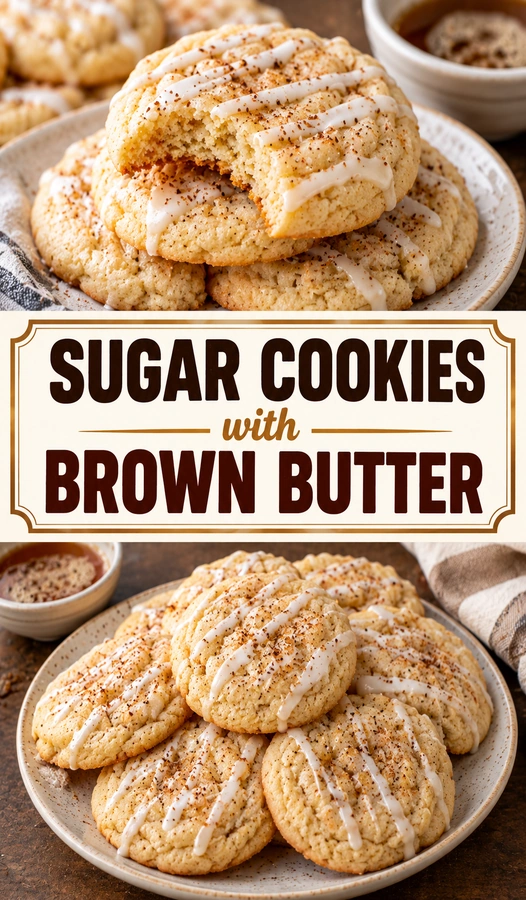
The kitchen transforms the moment butter begins to foam and sizzle in a pan, shifting from a simple fat to a golden, nutty elixir. This aromatic change is the foundation of a cookie that tastes far more complex than its minimal ingredient list suggests.
These brown butter sugar cookies take the traditional sweet treat and add a layer of toasted depth. They bridge the gap between a simple sugar cookie and a rich shortbread.
Readers love this version because it provides a sophisticated flavor profile without requiring difficult techniques. It is a small adjustment that yields a professional result.
Unlike store-bought cookies that often rely on artificial flavorings for sweetness, these rely on the natural caramelization of milk solids. The result is a warm, toasted taste that balances the sugar.
This recipe is ideal for those who enjoy a buttery, melt-in-your-mouth texture. It works well for anyone looking to upgrade their basic baking repertoire.
Measuring your flour with a spoon and leveling it off helps prevent the cookies from becoming too cakey. This simple habit ensures a consistent texture every time.
The following guide details how to achieve the perfect golden-brown butter and assemble these cookies with ease.
- ●Why You’ll Love This Recipe
- ●A Brief Background / Why This Recipe Works
- ●Perfect For Cozy Gatherings and Holiday Platters
- ●Main Ingredient Spotlight: Brown Butter
- ●Secondary Ingredient Spotlight: Pure Vanilla Extract
- ●Key Ingredients
- ●How to Make It
- ●Pro Tips
- ●Delicious Variations
- ●Best Ways to Serve
- ●Storage and Leftovers
- ●Frequently Asked Questions
- ●Why This Recipe Belongs in Your Weekly Rotation
- ●Final Thoughts
These cookies offer a level of flavor depth that standard sugar cookies simply cannot match. The process is straightforward, making it accessible for bakers of all skill levels.
- ●Rich, nutty flavor from toasted butter solids.
- ●Soft, chewy center with slightly crisp edges.
- ●Simple pantry staples with no rare ingredients.
- ●Consistent shape and size for a professional look.
- ●Balanced sweetness that isn’t overwhelming.
- ●Pairs beautifully with both coffee and tea.
- ●Works as a base for various frosting styles.
- ●Faster to prep than complex decorated cookies.
- ●Aromatic scent that fills the entire home.
- ●Longer shelf life than high-moisture cookies.
This recipe turns a basic dessert into a centerpiece treat that guests will notice immediately.
A Brief Background / Why This Recipe Works |
Traditional sugar cookies rely on the creamed mixture of butter and sugar for lift and sweetness. butter first, you introduce a Maillard reaction, where the proteins and sugars in the butter toast. This creates a savory undertone that cuts through the sugar.
The moisture loss during the browning process also changes the cookie’s structure. Because some water evaporates from the butter, the resulting cookie is denser and more flavorful, avoiding the airy, cake-like texture found in some recipes.
Adding a touch of cornstarch or using a specific flour measurement keeps the cookies tender. This ensures they remain soft for days after baking.
Combining these elements creates a treat that feels like a bakery find but is made in a home kitchen.
Perfect For Cozy Gatherings and Holiday Platters |
These cookies are a great addition to holiday dessert trays. Their golden hue and rich scent complement other festive treats like Irresistible Christmas Gooey Butter Cookies Recipe or peppermint barks.
They are equally suitable for casual afternoon tea or a quick sweet fix during a busy week. Because they hold their shape well, they are easy to transport to potlucks or school events.
For those who enjoy themed baking, these provide a versatile base. You can easily adapt them into something like Spooky Ghost Brown Butter Pumpkin Cookies Recipe Delight Easy Halloween Treat Ideas by adding a few seasonal ingredients.
Main Ingredient Spotlight: Brown Butter |
Brown butter, or beurre noisette, is the star of this recipe. until the milk solids toast, you create a flavor reminiscent of hazelnuts and toasted cream. This adds a dimensional saltiness and richness that raw butter lacks.
Beyond flavor, brown butter alters the texture of the dough. The reduction in water content allows the sugar to caramelize more effectively during baking, resulting in those coveted crisp edges and a chewy center.
Secondary Ingredient Spotlight: Pure Vanilla Extract |
Vanilla extract serves as the bridge between the toasted butter and the sweet sugar. It adds a floral, aromatic quality that rounds out the sharp notes of the browned butter.
Using a high-quality pure extract rather than an imitation version makes a noticeable difference in the aftertaste. The natural bean notes provide a warmth that enhances the overall profile of the cookie.
Key Ingredients |
These ingredients are common kitchen staples that combine to create a sophisticated dessert.
- ●Unsalted Butter — Provides the fat and the nutty flavor once browned.
- ●Granulated Sugar — Creates the sweetness and the crisp edges.
- ●Brown Sugar — Adds moisture and a slight molasses depth.
- ●Egg — Binds the ingredients and provides structure.
- ●Vanilla Extract — Enhances the aromatic profile of the dough.
- ●All-Purpose Flour — The main structure that holds the cookie together.
- ●Cornstarch — Ensures a soft, tender crumb.
- ●Baking Soda — Helps the cookies rise and brown evenly.
- ●Salt — Balances the sweetness and accentuates the toasted butter.
How to Make It |
Follow these steps carefully to ensure the butter is toasted correctly and the cookies don’t overspread.
- Brown the butter: Place the butter in a light-colored saucepan over medium heat. Melt it, then continue cooking as it foams and pops; once you see small brown bits at the bottom and smell a nutty aroma, remove it from heat immediately to avoid burning.
- Cool the butter: Let the brown butter cool for about 15 to 20 minutes. If you add it to the sugar while boiling hot, it may melt the sugar too quickly or cook the eggs, leading to an oily dough.
- Cream the sugars: Beat the cooled brown butter with the granulated and brown sugars until the mixture is smooth. Use a mixer on medium speed to incorporate air, which prevents the cookies from becoming too dense.
- Incorporate wet ingredients: Mix in the egg and vanilla extract. Beat the mixture until it is pale and fluffy, ensuring the egg is fully emulsified into the fat.
- Combine dry ingredients: Sift together the flour, cornstarch, baking soda, and salt in a separate bowl. Sifting removes lumps and ensures the cornstarch is evenly distributed for a consistent texture.
- Fold the dough: Gradually add the dry ingredients to the wet mixture on low speed. Mix only until the flour streaks disappear; overmixing develops gluten, which makes the cookies tough instead of tender.
- Chill the dough: Place the dough in the refrigerator for at least 30 minutes. This solidifies the fats and prevents the cookies from spreading into flat puddles in the oven.
- Bake the cookies: Scoop rounded tablespoons of dough onto a parchment-lined sheet. Bake until the edges are barely golden but the centers still look slightly soft; they will firm up on the hot pan.
1Small adjustments in technique can lead to a significantly better cookie.
- ●2Use a light-colored pan: Browning butter in a dark pan makes it hard to see the color of the milk solids, which increases the risk of burning them.
- ●3Measure flour by weight: Using a kitchen scale is the most accurate way to prevent dry cookies. If using cups, spoon the flour into the cup rather than scooping.
- ●4Avoid overbaking: Take the cookies out when the middle looks slightly underdone. They continue to cook for several minutes after leaving the oven.
- ●5Room temperature eggs: Cold eggs can cause the browned butter to seize up. Place your egg in a bowl of warm water for five minutes if it is straight from the fridge.
- ●6Line your pans: Use parchment paper or silicone mats. This prevents sticking and allows for easier cleanup compared to greasing the pan.
Delicious Variations |
Once you master the base recipe, try these twists to create different flavor profiles.
- ●Maple Pecan: Fold in finely chopped toasted pecans and replace the vanilla with maple extract for a cozy, autumnal taste.
- ●Lemon Zest: Add the zest of one large lemon to the sugar for a bright, citrusy contrast to the rich butter.
- ●Chocolate Chip: Stir in semi-sweet mini chocolate chips to turn these into a hybrid between a sugar cookie and a chocolate chip cookie.
- ●Cinnamon Sugar Coating: Roll the dough balls in a mixture of cinnamon and sugar before baking for a snickerdoodle-style finish.
- ●Sea Salt Topping: Sprinkle a pinch of flaky sea salt on top immediately after baking to enhance the savory notes of the brown butter.
These variations allow you to use the same base dough for different occasions throughout the year.
Best Ways to Serve |
These cookies are versatile and can be presented in several ways depending on the event.
- ●Warm from the oven with a glass of cold milk.
- ●Stacked on a platter with fresh berries and whipped cream.
- ●Served as a side to a bowl of vanilla bean ice cream.
- ●Dipped into a rich espresso or dark roast coffee.
For a more formal presentation, you can dust the cooled cookies with a light coating of powdered sugar. This adds a professional touch and a hint of extra sweetness.
If serving at a party, arrange them in a tiered tower. The rich aroma of the brown butter will act as a natural draw for your guests.
Storage and Leftovers |
Refrigerating
Store baked cookies in an airtight container in the refrigerator for up to 7 days. Keep them away from strong-smelling foods to prevent the butter from absorbing other odors.
Reheating
To restore the soft texture, place a cookie in the microwave for 5 to 10 seconds. This gently melts the fats and brings back the fresh-baked aroma.
Freezing
Freeze unbaked dough balls on a tray and then transfer them to a freezer bag for up to 3 months. Bake them directly from frozen, adding 1 to 2 minutes to the total cook time.
Frequently Asked Questions |
- ●Q: Can I use melted butter instead of browned butter?A: While you can use melted butter, the flavor will be significantly different. Browned butter provides a toasted, nutty taste that melted butter lacks. If you skip browning, the cookies will taste like a standard sugar cookie rather than a gourmet treat.
- ●Q: Why did my cookies spread too much in the oven?A: This usually happens if the butter was too hot when mixed or if the dough wasn’t chilled. Chilling the dough firms up the fat, which slows down the melting process in the oven and keeps the cookies thick.
- ●Q: Can I substitute the brown sugar with more white sugar?A: You can, but the texture will change. Brown sugar contains molasses, which adds moisture and a chewy quality. Using only white sugar will result in a crispier, flatter cookie with a less complex flavor.
- ●Q: How do I know when the butter is actually browned?A: Look for the butter to stop bubbling and start foaming. You will see small, golden-brown specks forming at the bottom of the pan, and the scent will shift from buttery to smelling like toasted hazelnuts.
- ●Q: Is it possible to make these gluten-free?A: Yes, you can use a high-quality 1:1 gluten-free flour blend that includes xanthan gum. Because the recipe already uses cornstarch, the texture remains relatively similar, though the edges may not be as crisp.
Why This Recipe Belongs in Your Weekly Rotation |
Adding a high-quality treat to your routine doesn’t have to mean spending hours in the kitchen. These cookies use simple ingredients to achieve a taste that rivals professional bakeries, making them a reliable choice for any day of the week.
The ability to freeze the dough means you can have fresh, warm cookies on demand. This eliminates the need for processed snacks and allows you to control the ingredients going into your treats.
Whether you are looking for a comforting snack or a crowd-pleasing dessert, this recipe provides a consistent result. The depth of the brown butter ensures that these are never boring.
Final Thoughts |
Brown butter sugar cookies are a masterful blend of simplicity and sophistication. By taking a few extra minutes to toast the butter, you elevate a basic pantry staple into a rich, nutty dessert.
These cookies are the perfect project for those who love the smell of a home bakery. They provide a satisfying texture and a flavor profile that appeals to both children and adults.
Gather your ingredients and start browning your butter to experience this toasted delight for yourself.

Brown Butter Sugar Cookies: A Toasted Twist on a Classic
- Prep Time: 45 minutes
- Cook Time: 12 minutes
- Total Time: 57 minutes
- Yield: 24 cookies 1x
- Category: Dessert
- Method: Baking
- Cuisine: American
Description
A sophisticated take on the classic sugar cookie, utilizing browned butter to add a deep, nutty flavor and a perfectly chewy texture.
Ingredients
- 1 cup (2 sticks) unsalted butter, browned
- 3/4 cup granulated sugar
- 1/2 cup packed light brown sugar
- 1 large egg, room temperature
- 2 teaspoons pure vanilla extract
- 2 1/4 cups all-purpose flour
- 1 tablespoon cornstarch
- 1 teaspoon baking soda
- 1/2 teaspoon salt
Instructions
- Preheat your oven to 350°F (175°C) and line two baking sheets with parchment paper.
- Place butter in a saucepan over medium heat. Cook until it foams and golden-brown bits form at the bottom. Remove from heat and let cool for 20 minutes.
- In a large bowl, beat the cooled brown butter with granulated and brown sugars until smooth.
- Mix in the egg and vanilla extract until the batter is pale and fluffy.
- In a separate bowl, sift together flour, cornstarch, baking soda, and salt.
- Slowly stir the dry ingredients into the wet ingredients on low speed until just combined.
- Refrigerate the dough for 30 minutes to prevent excessive spreading.
- Scoop 1-tablespoon portions of dough and place them 2 inches apart on the sheets.
- Bake for 10-12 minutes, or until edges are lightly golden but centers remain soft.
- Allow cookies to cool on the pan for 5 minutes before transferring to a wire rack.