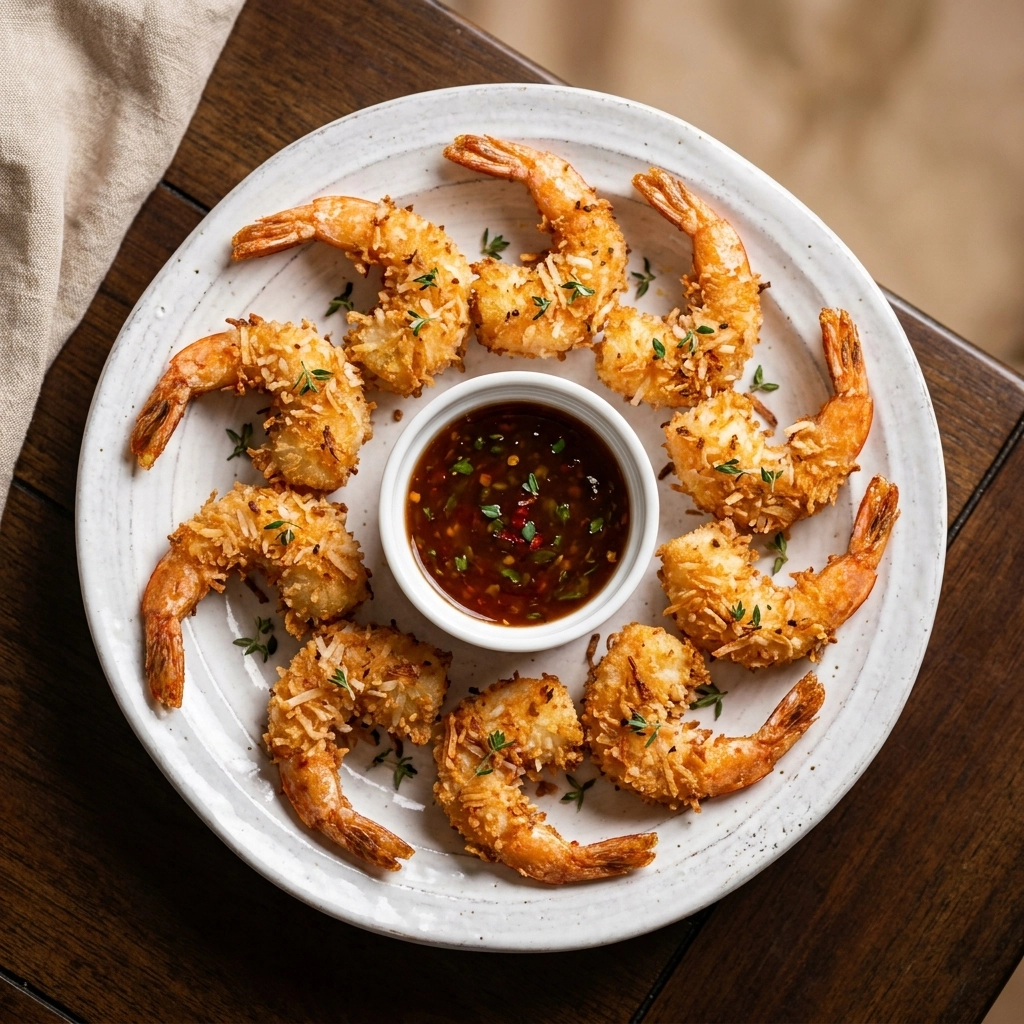
The Tropical Tumble of Trial and Error |
Let me be honest with you: my first attempt at coconut shrimp was a complete disaster that almost ended in a kitchen fire. I mistakenly thought that dumping a cup of coconut oil directly onto the coconut flakes before putting them in the air fryer was a ‘pro move,’ but instead, I created a smoky, coconut-scented sauna that smelled like a beach fire gone wrong. I learned the hard way that the air fryer does the heavy lifting, and too much oil just leads to a soggy, burnt mess that tastes like a regretful vacation.
After several iterations of ‘why is this still pale?’ and ‘why is the coconut falling off?’, I finally cracked the code for that golden, shatter-crisp exterior. Now, this recipe is my secret weapon for impressing people who think I actually have my life together, while I’m secretly just leaning on the magic of convection heat. It is a symphony of sweet, salty, and spicy that makes you feel like you are on a Caribbean cruise without the risk of seasickness or overpriced cocktails.
- ●Zero deep-frying means way less cleanup and fewer calories of guilt.
- ●The homemade sweet chili sauce puts the bottled stuff to absolute shame.
- ●It takes less than 20 minutes from frozen/fresh to plate.
- ●The texture contrast between the juicy shrimp and crunchy coconut is elite.
- ●It’s an impressive party appetizer that looks like it cost $22 at a bistro.
Essential Ingredients |
Large Shrimp: I always prefer wild-caught for a cleaner ocean taste, though farm-raised works fine. If you skip these, you’re essentially making coconut sticks, which is a tragedy.
Unsweetened Shredded Coconut: Go for the fine-shredded variety from brands like Bob’s Red Mill. Skipping this removes the entire soul of the dish; you can’t have coconut shrimp without the coconut.
Panko Breadcrumbs: I use Japanese-style Panko for maximum crunch. If you omit them, the coconut won’t adhere as well and you’ll lose that signature ‘snap’.
Egg: A simple large organic egg acts as the glue. Without it, your coating will slide off the shrimp like a cheap raincoat in a thunderstorm.
Cornstarch: This is the secret to a dry surface for the egg to grip. Skipping it often results in ‘bald spots’ on your shrimp where the coconut didn’t stick.
Apricot Preserves: I love St. Dalfour for the sauce. Skipping this means no sweetness, and your sauce will just be spicy vinegar water.
Sriracha: Huy Fong is the classic choice for that vinegary kick. Without it, the sauce lacks the essential heat needed to balance the coconut.
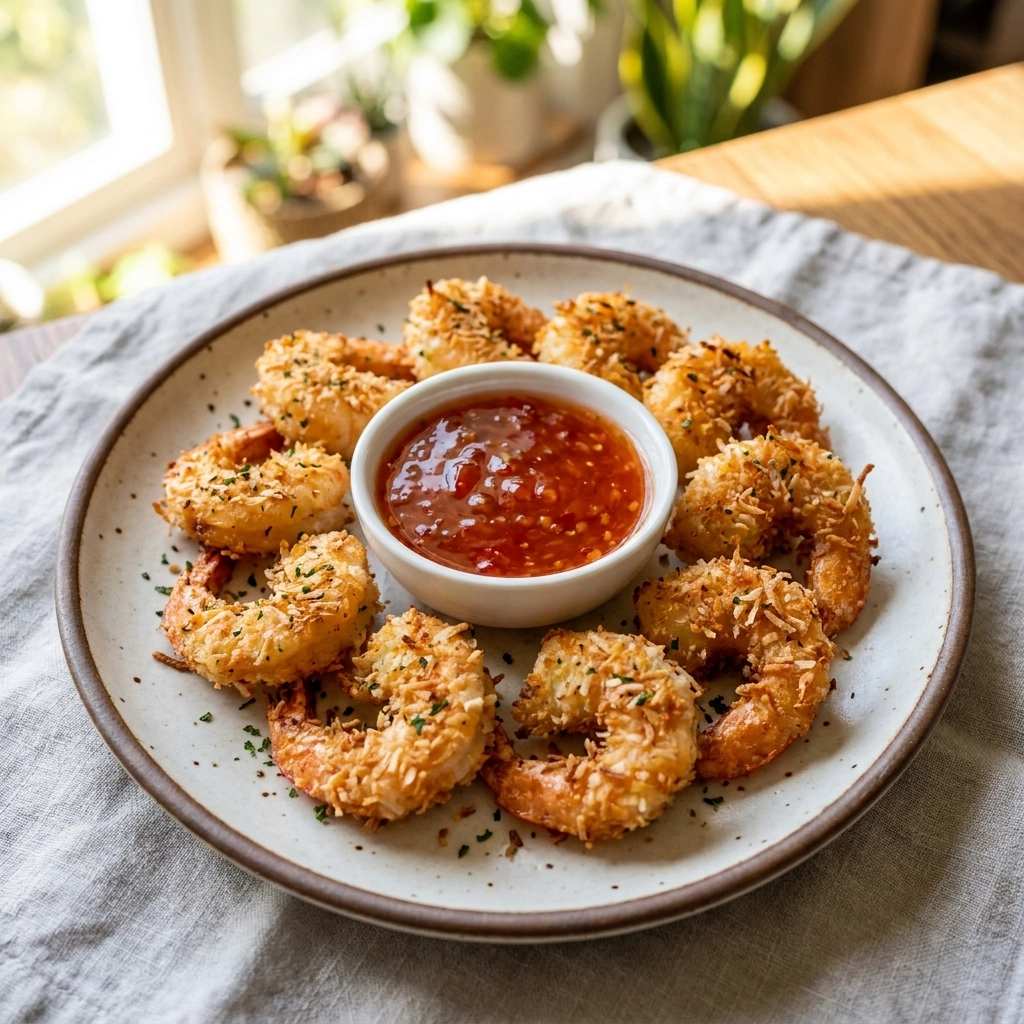 Let’s Make it Together |
- Pat the shrimp completely dry with paper towels to ensure the breading doesn’t slip. Pro tip: Moisture is the enemy of crispiness, so don’t skip this step.
- Dredge each shrimp in cornstarch, shaking off any excess until they are lightly coated.
- Dip the shrimp into the beaten egg mixture, ensuring every nook and cranny is covered.
- Press the shrimp firmly into a mixture of Panko and shredded coconut, pushing the flakes into the meat. Pro tip: Use your palm to really squash the coconut onto the shrimp for a thick crust.
- Arrange the shrimp in a single layer in the air fryer basket, leaving space for air to circulate.
- Air fry at 400°F (200°C) for 8-10 minutes, flipping halfway through until golden brown. Pro tip: Don’t overcrowd the basket or you’ll end up with steamed shrimp instead of fried ones.
- Whisk together the apricot preserves, sriracha, and rice vinegar in a small bowl until smooth for the dipping sauce.
Never stack your shrimp in the basket because the lack of airflow creates soggy bottoms.
Always use unsweetened coconut to avoid a cloying, sugary taste that overpowers the shrimp.
Ensure your shrimp are peeled and deveined before you start the breading process.
Avoid overcooking them, as shrimp turn into rubber bands the second they cross the line.
The sauce is best if let to sit for ten minutes to allow the flavors to meld.
Perfecting the Cooking Process |
You’ll notice that the magic happens precisely at 400°F. This high temperature triggers the Maillard reaction quickly, searing the outside of the coconut and Panko before the shrimp overcooks on the inside. If you drop the temp to 350°F, the coconut will absorb the shrimp juices and become mushy rather than crisp.
Trust your nose here; the scent of toasted coconut is your primary indicator that they are nearly done. Because air fryers vary in power, the 8-10 minute window is a guideline. The science of convection means the hot air is swirling rapidly, effectively mimicking a deep fryer from the surface of the coating.
Your basket should never be more than 50% full. When shrimp are too close together, they create a ‘steam zone’ where the moisture escaping the shrimp gets trapped, preventing the coconut from reaching that critical dehydration point required for a crunch.
Add Your Touch |
You can easily swap the Panko for crushed cornflakes if you want an even more aggressive crunch and a slightly cornier flavor profile. Some people also enjoy adding a pinch of cayenne pepper to the coconut mixture for a slow-burn heat that hits after the sweetness.
For a zesty twist, try adding lime zest to the cornstarch dredge. If you aren’t a fan of apricot preserves, a high-quality orange marmalade makes a fantastic substitute in the sauce for a more citrusy, bright finish.
Storing & Reheating |
Place any leftover shrimp in an airtight container lined with a paper towel to absorb excess moisture. They will stay fresh in the refrigerator for up to two days, though the crunch will naturally diminish over time.
To restore the glory of the crisp, avoid the microwave at all costs. Pop them back into the air fryer at 375°F for 2-3 minutes until they are hot and the coconut is sizzling again.
1Freeze your breaded shrimp for 15 minutes before air frying to help the crust set.
2Use a spray bottle of oil to lightly mist the coconut for a deeper golden color.
3Squeeze fresh lime juice over the shrimp immediately after they come out of the fryer.
4Pat your shrimp dry with a cloth instead of paper towels to reduce waste.
5Strain your homemade sauce through a fine mesh sieve for a restaurant-smooth texture.
FAQ |
- ●Q: Can I use frozen shrimp for this recipe?A: Yes, you absolutely can, but you must thaw them completely and pat them extremely dry. If you fry them while they are still icy, the steam will release and push the coconut coating right off the shrimp, leaving you with a sad pile of flakes.
- ●Q: What can I use instead of an air fryer?A: You can use a conventional oven on the ‘convection’ or ‘broil’ setting at 425°F. Place the shrimp on a wire rack over a baking sheet so air can reach the bottom, and bake for about 12-15 minutes, flipping halfway through for even browning.
- ●Q: Why is my coconut coating falling off?A: This usually happens because the shrimp were too wet or you skipped the cornstarch step. The cornstarch creates a dry ‘anchor’ for the egg, and the egg acts as the glue; if any of these steps are skipped, the crust will simply slide away.
- ●Q: How do I make the sauce less sweet?A: If the apricot preserves are too sugary for your palate, increase the amount of rice vinegar or add a squeeze of fresh lime juice. Adding a pinch of salt or a dash of soy sauce will also provide a savory counterbalance to the sugar.
Crispy Air Fryer Coconut Shrimp with Easy Homemade Sweet Chili Sauce
- Prep Time: 10 minutes
- Cook Time: 10 minutes
- Total Time: 20 minutes
- Yield: 4 servings 1x
- Category: Appetizer
- Method: Air Frying
- Cuisine: Fusion
Description
Crispy, tropical coconut shrimp air-fried to golden perfection and served with a tangy, homemade sweet chili dipping sauce.
Ingredients
- 1 lb large shrimp, peeled and deveined
- 1/2 cup cornstarch
- 1 large egg, beaten
- 1/2 cup Panko breadcrumbs
- 1/2 cup unsweetened shredded coconut
- 1/4 cup apricot preserves
- 1 tbsp Sriracha
- 1 tbsp rice vinegar
Instructions
- Pat shrimp dry and dredge in cornstarch.
- Dip shrimp into beaten egg.
- Press shrimp into Panko and coconut mixture.
- Place shrimp in air fryer basket in a single layer.
- Air fry at 400°F for 8-10 minutes, flipping halfway.
- Whisk apricot preserves, Sriracha, and rice vinegar together for the sauce.


