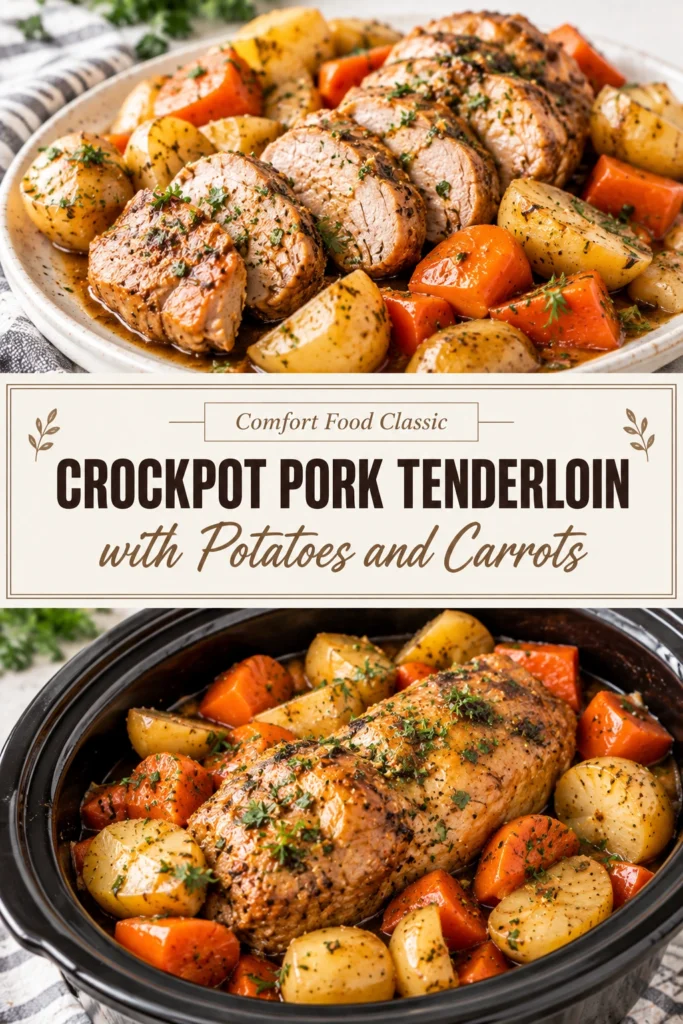
Browned pork paired with the earthy sweetness of slow-cooked carrots creates a comforting flavor profile that feels like a Sunday roast. This combination works because the lean meat absorbs the aromatic juices released vegetables during the long cooking process.
This recipe is a complete meal in one pot, featuring a tenderloin that remains juicy rather than drying out. It provides a balanced plate of protein and vegetables without needing separate side dishes.
Home cooks often prefer this method because it removes the stress of timing multiple oven racks and pans. The slow cooker handles the temperature regulation, allowing the meat to soften gradually.
Unlike store-bought pre-marinated meats that often contain excessive sodium, this version uses fresh herbs and garlic to build a clean, deep flavor.
Families looking for a low-effort dinner that doesn’t sacrifice nutrition will find this approach ideal. It fits perfectly into a routine where prep happens in the morning and dinner is ready the moment the family gathers.
The following guide outlines the exact steps to achieve a tender result every time.
- ●Why You’ll Love This Recipe
- ●A Brief Background on Slow-Cooked Pork
- ●Perfect For Busy Weeknights and Meal Prep
- ●Pork Tenderloin Spotlight
- ●Aromatic Garlic and Herb Spotlight
- ●Key Ingredients
- ●How to Make It
- ●Pro Tips
- ●Delicious Variations
- ●Best Ways to Serve
- ●Storage and Leftovers
- ●Frequently Asked Questions
- ●Why This Recipe Belongs in Your Weekly Rotation
- ●Final Thoughts
This meal streamlines the cooking process main course and sides into a single vessel, reducing cleanup significantly.
- ●Minimal active prep time required before the slow cooker takes over.
- ●Tenderloin stays succulent and avoids the toughness common in overcooked lean meats.
- ●Root vegetables soak up the pork drippings for intense flavor.
- ●Naturally gluten-free and easily adaptable for different dietary needs.
- ●Provides a balanced ratio of protein, carbohydrates, and vitamins.
- ●The aroma fills the home throughout the day, creating a welcoming atmosphere.
- ●Cost-effective use of pantry staples like garlic, thyme, and rosemary.
- ●Consistent results regardless of your skill level in the kitchen.
The combination of simplicity and flavor makes this a reliable choice for any evening.
A Brief Background on Slow-Cooked Pork |
Pork tenderloin is a lean cut that differs significantly from the pork shoulder used in Slow Cooker Pulled Pork With Rosemary And Garlic Easy Crockpot Pork Shoulder. Because it lacks the heavy connective tissue of a shoulder, it requires a more careful approach to avoid overcooking.
Slow cooking this cut allows the heat to penetrate evenly, while the surrounding vegetables act as a buffer that prevents the meat from boiling in its own juices. This creates a texture that is tender but still holds its shape when sliced.
Incorporating root vegetables like carrots and potatoes adds a natural sweetness and thickness to the cooking liquid, transforming it into a light gravy.
This method bridges the gap between a formal roast and a casual weeknight meal.
Perfect For Busy Weeknights and Meal Prep |
Mornings are the ideal time to assemble this dish, allowing the slow cooker to work while the household is at work or school. The set-it-and-forget-it nature means there is no need to monitor a hot oven or stir pots throughout the evening.
For those who practice meal prep, this recipe yields generous portions that maintain their quality over several days. The vegetables hold their structure well, making them easy to pack in containers for office lunches.
Holiday gatherings often benefit from this recipe as it frees up oven space for other dishes. It serves as a sophisticated main course that requires very little last-minute attention.
Pork Tenderloin Spotlight |
Pork tenderloin is prized for its lean profile and mild flavor, which makes it an excellent canvas for garlic and herbs. Unlike other cuts, it has a fine grain that allows it to absorb seasonings deeply without becoming tough.
The meat provides a clean, savory taste that complements the earthiness of the carrots. When cooked slowly, it reaches a state of tenderness that rivals more expensive cuts of beef.
Aromatic Garlic and Herb Spotlight |
Garlic provides the pungent, savory foundation of the dish, mellowing into a sweet, nutty flavor during the long cook time. It permeates both the meat and the vegetables, tying the different components together.
Fresh thyme and rosemary add piney and citrusy notes that cut through the richness of the pork. These herbs are essential for adding a layer of complexity that elevates the meal from basic to gourmet.
Key Ingredients |
Selecting high-quality, fresh components ensures the best possible flavor profile for this one-pot meal.
- ●Pork Tenderloin — lean, pale pink meat that provides the primary protein and a delicate texture.
- ●Potatoes — starchy and golden, these provide a hearty base and absorb the savory pan juices.
- ●Carrots — vibrant orange roots that contribute a natural sweetness and a soft, tender bite.
- ●Garlic — pungent white cloves that infuse the dish with a deep, aromatic warmth.
- ●Olive Oil — a smooth liquid fat used for searing the meat to develop a golden-brown crust.
- ●Fresh Thyme — small, earthy leaves that add a subtle floral and lemony aroma.
- ●Fresh Rosemary — needle-like leaves with a powerful, woodsy scent.
- ●Beef or Vegetable Broth — a savory liquid that prevents the meat from drying and creates a light sauce.
- ●Salt and Black Pepper — essential seasonings that enhance all other flavors in the pot.
How to Make It |
Following these steps carefully will prevent the pork from overcooking while ensuring the vegetables are perfectly tender.
- Sear the pork: Heat olive oil in a skillet over medium-high heat and brown the tenderloin on all sides. This creates a Maillard reaction, which adds a deep, caramelized flavor and visual appeal that slow cooking alone cannot achieve.
- Prepare the vegetable bed: Place chopped potatoes and carrots at the bottom of the crockpot. Positioning the vegetables underneath the meat allows them to cook in the rendered fats and juices that drip down during the process.
- Season the meat: Rub the seared pork with salt, pepper, and minced garlic before placing it atop the vegetables. Applying seasonings directly to the meat ensures every slice is flavorful throughout.
- Add aromatics and liquid: Scatter fresh thyme and rosemary over the pork and pour in the broth. The broth provides the necessary moisture to steam the vegetables and keep the pork moist, similar to the liquid used in Ultimate Slow Cooker Garlic Butter Beef Bites And Potatoes Easy Crockpot Dinner
- Slow cook the meal: Set the crockpot to low for 6 to 7 hours or high for 3 to 4 hours. Using the low setting is preferred for tenderloin to prevent the lean muscle fibers from tightening and becoming dry.
- Rest the meat: Remove the pork from the pot and let it rest on a cutting board for 10 minutes. Resting allows the juices to redistribute within the meat, ensuring the pork stays moist when sliced.
- Slice and serve: Cut the pork into thick medallions and serve them alongside the tender vegetables, spooning the remaining pot juices over the top.
1Small adjustments in technique can lead to a significantly better final result.
- ●2Cut vegetables uniformly: Ensure potato chunks and carrot slices are roughly the same size so they finish cooking at the same time.
- ●3Avoid overfilling: Leave a small amount of space at the top of the crockpot to allow steam to circulate evenly.
- ●4Use a meat thermometer: Pull the pork when it reaches an internal temperature of 145F to avoid the dryness common in lean cuts.
- ●5Deglaze the pan: After searing the pork, pour a splash of broth into the skillet and scrape up the brown bits to add back into the crockpot.
- ●6Fresh over dried herbs: Use fresh herbs if possible, as dried herbs can sometimes become bitter over a long slow-cook cycle.
Delicious Variations |
You can easily modify this recipe to suit different tastes or seasonal availability.
- ●Honey Garlic Twist: Stir in two tablespoons of honey and a splash of soy sauce for a sweet and savory glaze.
- ●Root Vegetable Swap: Replace carrots with parsnips or rutabaga for a more complex, peppery earthiness.
- ●Creamy Finish: Stir a tablespoon of cornstarch mixed with water into the liquid at the end to create a thicker gravy.
- ●Spicy Kick: Add red pepper flakes or a sliced jalapeño to the vegetable bed for a hint of heat.
- ●Autumn Style: Add halved Brussels sprouts or chunks of butternut squash during the last two hours of cooking.
These changes allow the recipe to evolve with your preferences while keeping the core technique the same.
Best Ways to Serve |
While the dish is a complete meal, a few additions can enhance the presentation and taste.
- ●Garnish with fresh parsley for a pop of color and a clean, grassy finish.
- ●Serve with a side of crusty sourdough bread to soak up the garlic-infused broth.
- ●Pair with a light arugula salad tossed in lemon vinaigrette to balance the richness.
- ●Offer a side of horseradish cream or Dijon mustard for dipping the pork.
For a more formal presentation, arrange the sliced pork medallions in a fan shape on a platter, surrounding them with the cooked root vegetables.
If you enjoy other pork preparations, you might also like Mouthwatering Pork Tenderloin Tacos With Corn Salsa for a brighter, zestier take on this protein.
Storage and Leftovers |
Refrigerating
Store the pork and vegetables in airtight containers in the refrigerator for up to 4 days. Keep the sauce in a separate container if you prefer to keep the vegetables from becoming too soft.
Reheating
Warm the leftovers in a skillet over medium heat with a tablespoon of water or broth to maintain moisture. Alternatively, use a microwave on medium power for 2 minutes, stirring halfway through to avoid hot spots.
Freezing
Freeze the cooked meal in freezer-safe bags for up to 3 months. Thaw completely in the refrigerator overnight before reheating in the oven at 325F until warmed through.
Frequently Asked Questions |
- ●Q: Can I use pork loin instead of tenderloin?A: Yes, you can use pork loin, but be aware that it is a larger and slightly different cut. Pork loin usually requires a longer cooking time and may need more liquid to ensure it remains moist throughout the process.
- ●Q: Do I have to sear the meat first?A: Searing is not strictly required for the meat to cook, but it is highly recommended. The browning process adds a layer of flavor and a golden color that cannot be replicated cooker alone.
- ●Q: My vegetables are too mushy, what happened?A: Mushy vegetables usually result from overcooking or cutting them too small. Ensure you use a low heat setting and keep the vegetable pieces at least one inch thick to maintain their structure over several hours.
- ●Q: Can I add the vegetables later in the process?A: If you prefer very firm vegetables, you can add the carrots and potatoes three hours before the pork is finished. However, adding them at the start allows them to absorb the most flavor from the meat.
- ●Q: What other liquids can I use instead of broth?A: You can substitute beef broth with chicken broth, vegetable broth, or even a mixture of water and a bit of Worcestershire sauce. The goal is to provide enough moisture to prevent the pork from drying out.
- ●Q: How do I know when the pork is perfectly done?A: The best way is to use a digital meat thermometer to check the thickest part of the tenderloin. When it reaches 145F (63C), it is safe to eat and will be juicy and tender.
Why This Recipe Belongs in Your Weekly Rotation |
This meal solves the common dilemma of wanting a healthy, homemade dinner without spending hours in the kitchen. main and sides, it eliminates the need for multiple pots and pans, making cleanup effortless.
The nutritional balance of lean protein and fiber-rich vegetables makes it a guilt-free choice for any night of the week. It provides a level of comfort and satiety that is often missing from quick-fix meals.
Integrating this into your routine allows you to enjoy a high-quality roast experience with minimal active effort. It is a reliable, scalable dish that adapts to any appetite or dietary preference.
Final Thoughts |
This Crockpot Pork Tenderloin with Potatoes and Carrots offers a seamless blend of convenience and flavor. meat and slow-cooking it with aromatic root vegetables, you achieve a restaurant-quality result with very little effort.
Whether you are prepping for the week or hosting a casual family gathering, this recipe provides a hearty and healthy solution. It removes the guesswork from cooking lean pork, ensuring a moist and tender finish every time.
Gather your ingredients and let your slow cooker handle the hard work for a dinner that feels like a celebration.

Crockpot Pork Tenderloin with Potatoes and Carrots
- Prep Time: 20 minutes
- Cook Time: 7 hours
- Total Time: 7 hours 20 minutes
- Yield: 4 servings 1x
- Category: Dinner
- Method: Slow Cooking
- Cuisine: American
Description
A hearty one-pot meal featuring a succulent pork tenderloin slow-cooked with carrots and potatoes in a savory garlic and herb broth.
Ingredients
- 1.5 lbs pork tenderloin
- 1 lb baby potatoes, halved
- 3 large carrots, sliced into chunks
- 4 cloves garlic, minced
- 2 tbsp olive oil
- 1 tsp fresh thyme leaves
- 1 tsp fresh rosemary, chopped
- 1 cup beef or vegetable broth
- 1 tsp salt
- 1/2 tsp black pepper
Instructions
- Heat olive oil in a skillet over medium-high heat and sear the pork tenderloin on all sides until golden brown.
- Place the halved potatoes and sliced carrots in the bottom of the slow cooker.
- Rub the seared pork with salt, pepper, and minced garlic, then place it on top of the vegetables.
- Sprinkle fresh thyme and rosemary over the meat and pour the broth into the bottom of the pot.
- Cover and cook on low for 6-7 hours or on high for 3-4 hours.
- Remove the pork from the slow cooker and let it rest on a board for 10 minutes.
- Slice the pork into medallions and serve with the vegetables and a drizzle of the cooking juices.