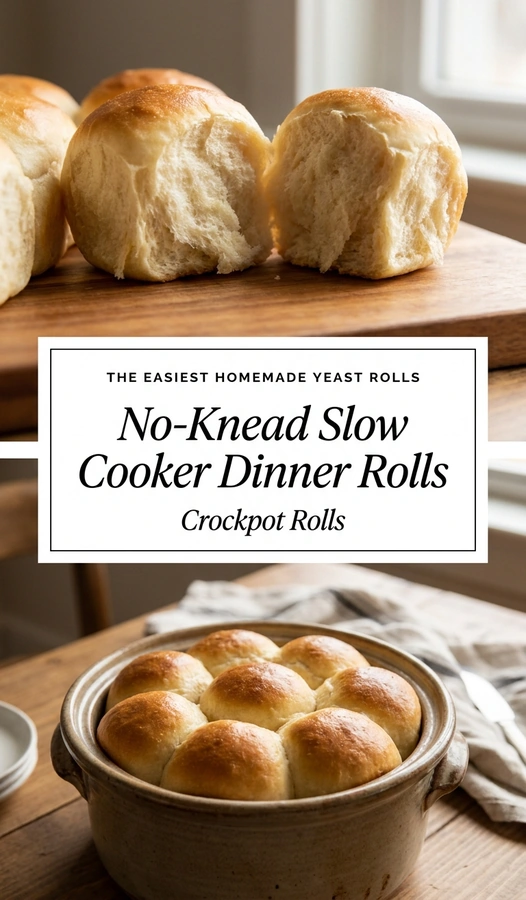
Warm, buttery rolls with a soft interior and a golden crust make any meal feel like a special occasion. These rolls bring that bakery-style quality to the home kitchen without the physical effort of traditional dough prep.
These no-knead slow cooker dinner rolls use the gentle, consistent heat of a crockpot to proof the dough. This process allows the yeast to activate slowly, resulting in a light and airy texture.
Many home bakers avoid yeast breads because of the time-consuming kneading and rising stages. This method eliminates the arm workout and the need for multiple bowls and timers.
Compared to store-bought rolls, these homemade versions lack preservatives and offer a rich, fresh butter flavor that is impossible to find in a plastic bag.
Anyone who wants the smell of fresh bread in their home but lacks confidence in their baking skills will find this approach approachable.
Using a slow cooker for the first rise means you can set the dough and forget it until it is time to shape and bake.
The following guide covers everything needed to achieve a perfect bake every time.
- ●Why You’ll Love This Recipe
- ●A Brief Background on Slow Cooker Proofing
- ●Perfect For Family Dinners and Holidays
- ●Main Ingredient Spotlight: Bread Flour
- ●Secondary Ingredient Spotlight: Unsalted Butter
- ●Key Ingredients
- ●How to Make It
- ●Pro Tips
- ●Delicious Variations
- ●Best Ways to Serve
- ●Storage and Leftovers
- ●Frequently Asked Questions
- ●Why This Recipe Belongs in Your Weekly Rotation
- ●Final Thoughts
These rolls offer a high reward for very little active effort, making them a staple for those who love homemade food but have limited time.
- ●Zero kneading required to achieve a fluffy crumb.
- ●The slow cooker creates a stable environment for the yeast to grow.
- ●Ingredients are simple pantry staples found in most kitchens.
- ●The rolls remain soft for several days when stored correctly.
- ●They pair perfectly with heavy mains like Tender Slow Cooker Bbq Beef Brisket Easy Crockpot Dinner Ideas
- ●The dough is forgiving and easy for beginners to handle.
- ●They provide a professional look on a holiday dinner table.
- ●Control over sugar and salt levels compared to commercial rolls.
- ●Reduced cleanup since the dough rises in the cooking vessel.
Once you experience the ease of the crockpot rise, you likely will not go back to traditional countertop proofing.
A Brief Background on Slow Cooker Proofing |
Traditional bread making requires a warm, draft-free environment for yeast to produce carbon dioxide. In many homes, especially during winter, finding a consistently warm spot can be a challenge.
A slow cooker on the “warm” setting or even just plugged in (depending on the model) provides a gentle heat source. This warmth accelerates the fermentation process without overheating the yeast, which would kill the organisms and prevent the bread from rising.
This technique transforms the slow cooker from a cooking tool into a dedicated proofing chamber.
Perfect For Family Dinners and Holidays |
On busy weeknights, these rolls can be prepped in the morning and baked just before dinner. They add a comforting element to simple meals, such as Rich Slow Cooker Creamy Ranch Chicken Recipe Easy Crockpot Dinner Ideas, providing a way to soak up extra sauces.
For meal prep, the dough can be shaped and frozen, then baked fresh on a specific day of the week. This ensures that family members have a warm side dish without requiring daily effort from the cook.
During holidays like Thanksgiving or Christmas, the oven is often crowded. Using the slow cooker for the rising phase frees up counter space and reduces the stress of timing the bread alongside the turkey or roast.
Main Ingredient Spotlight: Bread Flour |
Bread flour is essential here because it contains a higher protein content than all-purpose flour. This extra protein creates more gluten, which allows the rolls to hold the air bubbles produced , ensuring they rise high and stay fluffy rather than turning out flat or dense.
Secondary Ingredient Spotlight: Unsalted Butter |
Butter provides the necessary fat to tenderize the crumb. It interferes with gluten development just enough to keep the rolls soft and prevents the crust from becoming too hard.
Using unsalted butter allows you to control the exact amount of salt in the dough, which is critical because too much salt can inhibit the yeast’s ability to rise.
Key Ingredients |
Each component plays a specific role in the structure and flavor of the final roll.
- ●Bread Flour — provides the structure and lift needed for a fluffy roll.
- ●Instant Yeast — acts as the leavening agent to make the dough rise.
- ●Warm Water — hydrates the flour and activates the yeast.
- ●Unsalted Butter — adds richness and ensures a soft, tender texture.
- ●Sugar — feeds the yeast and adds a hint of sweetness.
- ●Salt — balances the flavor and controls the yeast activity.
- ●Egg — adds structure and contributes to a golden-brown finish.
How to Make It |
Following these steps carefully ensures the dough rises properly and bakes into golden, soft rolls.
- Combine dry ingredients: Whisk the bread flour, instant yeast, sugar, and salt in a large bowl. Mixing these thoroughly prevents the yeast from coming into direct contact with the salt, which can slow down the rising process.
- Incorporate wet ingredients: Stir in the warm water, melted butter, and beaten egg. Use a sturdy spoon or a dough hook to mix until a shaggy dough forms. Avoid over-mixing at this stage; you only want the flour to be fully hydrated.
- Transfer to slow cooker: Grease the inside of your slow cooker with butter or non-stick spray. Place the dough inside and cover it with the lid.
- Proof the dough: Set the slow cooker to the “warm” setting for about 60 to 90 minutes. If your slow cooker runs very hot, leave it off and just keep the lid on. The dough is ready when it has doubled in size and looks airy.
- Shape the rolls: Gently punch the dough down to release large air pockets. Turn the dough onto a floured surface and divide it into equal-sized balls. Roll them between your palms until smooth and place them in a greased baking pan.
- Final rise: Cover the pan with a clean towel and let the rolls rest for another 30 minutes. This second rise is what creates the lightweight, cloud-like texture.
- Bake to gold: Place the pan in a preheated oven. Bake until the tops are golden brown and the rolls sound hollow when tapped. Over-baking will dry out the center, so watch them closely in the final five minutes.
1Small adjustments in technique can lead to a significantly better result.
- ●2Check water temperature: Ensure your water is between 105°F and 115°F. Water that is too hot will kill the yeast, while cold water will leave the rolls dense.
- ●3Measure flour by weight: Use a kitchen scale if possible. Scooping flour with a cup can lead to packing too much into the measure, resulting in dry rolls.
- ●4Avoid drafty areas: Keep your baking pan away from open windows or air conditioning vents during the second rise to prevent the dough from collapsing.
- ●5Butter the tops: Brush the rolls with melted butter immediately after they come out of the oven for a professional shine and extra flavor.
- ●6Don’t over-proof: If the dough rises too much in the slow cooker, it may collapse during baking. Stop the proofing process as soon as the dough doubles.
Delicious Variations |
You can easily customize these rolls to fit different flavor profiles or dietary preferences.
- ●Garlic Herb Rolls: Add one teaspoon of garlic powder and a tablespoon of dried parsley to the dry ingredients.
- ●Honey Butter Rolls: Substitute the granulated sugar with honey for a deeper, floral sweetness.
- ●Cheesy Rolls: Fold in a cup of shredded sharp cheddar cheese after the first rise.
- ●Whole Wheat Twist: Replace half of the bread flour with whole wheat flour for a nuttier flavor and more fiber.
- ●Everything Bagel Style: Brush the tops with egg wash and sprinkle with everything bagel seasoning before baking.
These variations allow the rolls to adapt to whatever main course you are serving, from stews to roasted meats.
Best Ways to Serve |
Fresh rolls are versatile and can accompany a wide range of meals.
- ●Serve warm alongside Creamy Crockpot Chicken Pasta Easy Slow Cooker Dinner Ideas For Families
- ●Pair with a bowl of hearty soup or chili to balance the richness.
- ●Use them as a base for mini-sliders during a game day party.
- ●Serve with a side of honey butter or cinnamon butter for a breakfast treat.
For the best experience, serve the rolls within 30 minutes of baking. If they cool down, a quick flash in the oven restores the soft texture.
Placing the rolls in a basket lined with a cloth napkin keeps them warm longer and adds a rustic touch to the table presentation.
Storage and Leftovers |
Refrigerating
Store leftover rolls in an airtight container or a zip-top bag in the fridge for up to 5 days. Keep them tightly sealed to prevent the bread from drying out due to the cold air.
Reheating
To restore the fresh-baked texture, wrap a roll in foil and heat it in a 350°F oven for 5 to 10 minutes. Alternatively, microwave a roll for 15 seconds wrapped in a damp paper towel to steam the crumb back to softness.
Freezing
Freeze baked rolls in a freezer-safe bag for up to 3 months. For the best results, freeze them in single layers on a baking sheet before transferring them to a bag to prevent them from sticking together.
Frequently Asked Questions |
- ●Q: Can I use all-purpose flour instead of bread flour?A: You can use all-purpose flour, but the rolls will not rise as high and will have a softer, more cake-like structure. Bread flour has more protein, which is necessary for the gluten network that traps the air bubbles from the yeast.
- ●Q: Why didn’t my rolls rise in the slow cooker?A: This usually happens if the yeast is expired or if the water was too hot, which kills the yeast. Always check the expiration date on your yeast packet and use a thermometer to ensure the water is lukewarm, not boiling.
- ●Q: How do I know when the rolls are fully baked?A: The rolls should be a deep golden brown on top and the bottom should be lightly browned. If you tap the bottom of a roll, it should sound hollow. An internal thermometer should read around 190°F.
- ●Q: Can I make this dough the night before?A: Yes, you can perform a cold ferment dough and letting it rise in the refrigerator overnight. After the cold rise, let the dough come to room temperature before shaping and baking.
- ●Q: Do I have to grease the slow cooker?A: Yes, greasing the slow cooker is important because the dough expands significantly. Without a layer of butter or oil, the dough will stick to the sides, making it difficult to remove without deflating the air bubbles.
- ●Q: What if my slow cooker doesn’t have a warm setting?A: You can simply plug in the slow cooker and leave it off. Many slow cookers generate a small amount of residual heat just in, which is often enough to proof dough in a warm kitchen.
Why This Recipe Belongs in Your Weekly Rotation |
Adding homemade bread to your weekly meals elevates the entire dining experience. Instead of relying on processed store-bought options, you can provide a fresh, warm side that complements almost any protein or vegetable.
The efficiency of the slow cooker method means that baking bread no longer requires a dedicated afternoon of labor. It fits seamlessly into a busy schedule, allowing you to prioritize other tasks while the dough does the hard work of rising.
Having a reliable, no-knead recipe ensures that you can always provide a comforting touch to your family’s table. This approach removes the intimidation factor of yeast baking and makes it a repeatable success.
Final Thoughts |
These no-knead slow cooker dinner rolls combine the luxury of homemade bread with the convenience of modern kitchen appliances. heat for proofing, you achieve a light, buttery roll without the need for intensive kneading.
Whether you are preparing for a large holiday gathering or a simple Tuesday night dinner, these rolls provide a satisfying and comforting accompaniment. They are a simple way to bring a bakery-quality side dish into your home.
Put your slow cooker to work and enjoy the aroma of fresh bread filling your kitchen tonight.

No-Knead Slow Cooker Dinner Rolls: The Easiest Homemade Yeast Rolls | Crockpot Rolls
- Prep Time: 20 minutes
- Cook Time: 2 hours 30 minutes
- Total Time: 2 hours 50 minutes
- Yield: 12 rolls 1x
- Category: Bread
- Method: Baking
- Cuisine: American
Description
Fluffy, buttery homemade yeast rolls that rise in the slow cooker, eliminating the need for kneading. Perfect as a side for hearty dinners.
Ingredients
- 3 cups bread flour
- 2 1/4 tsp instant yeast (1 packet)
- 1 cup warm water (105-115°F)
- 1/4 cup unsalted butter, melted
- 2 tbsp granulated sugar
- 1 tsp salt
- 1 large egg, beaten
Instructions
- Whisk together bread flour, instant yeast, sugar, and salt in a large mixing bowl.
- Stir in warm water, melted butter, and beaten egg until a shaggy dough forms.
- Grease the inside of a slow cooker with butter and place the dough inside.
- Cover with the lid and set to 'warm' (or leave off if the unit runs hot) for 60-90 minutes until doubled in size.
- Punch the dough down and turn it onto a floured surface.
- Divide the dough into 12 equal portions and roll into smooth balls.
- Place rolls in a greased 9×13 inch baking pan and cover with a towel for 30 minutes.
- Preheat oven to 375°F and bake for 15-20 minutes until golden brown.
- Brush the tops with melted butter immediately after removing from the oven.