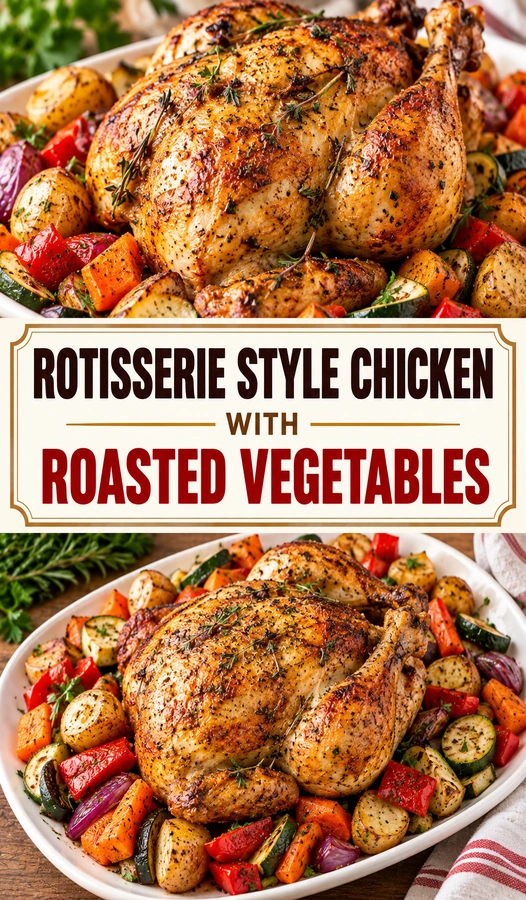
Fresh rosemary and browned butter create a fragrant crust that defines this oven-roasted meal. This pairing works because the woody herbs cut through the richness of the chicken skin.
This recipe is a complete dinner consisting of a whole roasted chicken surrounded by a medley of seasonal vegetables. Everything cooks in one roasting pan to simplify the process.
Home cooks appreciate this dish for its reliability and the way it fills the house with a comforting aroma. It transforms a basic bird into a centerpiece meal.
Unlike store-bought versions, this homemade roast allows you to control the salt and seasoning. You avoid the overly salty brine often found in commercial rotisserie chickens.
Families looking for a balanced meal will find this ideal since the vegetables cook in the chicken drippings. This method adds deep flavor to the carrots and potatoes.
Whether you are hosting a small gathering or prepping for the week, this approach is efficient. The following guide details how to achieve that professional gold color at home.
- ●Why You’ll Love This Recipe
- ●A Brief Background on the Method
- ●Perfect For Family Dinners and Meal Prep
- ●Chicken Ingredient Spotlight
- ●Aromatic Herbs Spotlight
- ●Key Ingredients
- ●How to Make It
- ●Pro Tips
- ●Delicious Variations
- ●Best Ways to Serve
- ●Storage and Leftovers
- ●Frequently Asked Questions
- ●Why This Recipe Belongs in Your Weekly Rotation
- ●Final Thoughts
This meal offers a streamlined way to get a high-protein main and nutrient-dense sides on the table simultaneously.
- ●The chicken skin becomes crisp and golden while the interior remains juicy.
- ●Root vegetables caramelize in the natural fats released .
- ●One roasting pan means significantly less cleanup after dinner.
- ●Fresh rosemary and thyme provide a sophisticated, earthy flavor profile.
- ●The recipe is scalable for different bird sizes without changing the core process.
- ●It creates a high volume of leftovers for salads or sandwiches.
- ●Preparation is minimal, as most of the work happens inside the oven.
- ●Using a whole bird is often more cost-effective than buying individual cuts.
Combining these elements results in a cohesive meal where every component enhances the other.
A Brief Background on the Method |
Achieving a rotisserie effect without a rotating spit requires a high-heat start and a careful resting period. chicken on a bed of vegetables, the meat is slightly elevated, allowing hot air to circulate around the bird.
The vegetables act as a natural roasting rack, preventing the bottom of the chicken from steaming in its own juices. This technique ensures the skin stays crisp on all sides while the vegetables absorb the savory drippings.
This method mimics the flavor of a professional rotisserie a dry rub and steady heat. It provides a consistent result that is far more manageable for the average home kitchen.
Perfect For Family Dinners and Meal Prep |
This dish is a staple for family gatherings because it provides a generous amount of food that pleases both children and adults. The natural sweetness of roasted carrots and potatoes makes the meal approachable for picky eaters.
For those focusing on meal prep, a whole roasted chicken is a goldmine. The breast meat can be sliced for lunches, while the remaining carcass can be used to make a rich stock for other recipes like Scrumptious Roasted Carrot Soup With Zaatar Chickpeas
Holiday tables also benefit from this approach, as it frees up oven space and reduces the number of pots on the stove. It serves as a hearty foundation for a festive meal.
Chicken Ingredient Spotlight |
A whole fryer or roaster chicken is the star of this dish. Its size is important; a bird that is too large may result in overcooked breast meat before the legs are done.
The skin acts as a protective barrier, locking in moisture while providing the surface area for the herb butter to caramelize. This creates the distinct contrast between the crunchy exterior and the tender meat.
Aromatic Herbs Spotlight |
Fresh rosemary and thyme are essential for that classic roast flavor. These herbs contain oils that release slowly during the roasting process, infusing both the meat and the surrounding vegetables.
Using fresh herbs rather than dried versions provides a brighter, more nuanced taste. When tucked under the skin or scattered in the pan, they prevent the chicken from tasting flat.
Key Ingredients |
Each component plays a specific role in building the final flavor profile of the roast.
- ●Whole Chicken — Provides the main protein and the fat needed to roast the vegetables.
- ●Unsalted Butter — Carries the herbs and helps the skin brown evenly.
- ●Fresh Rosemary — Adds a piney, aromatic depth to the crust.
- ●Fresh Thyme — Offers a subtle, earthy sweetness.
- ●Garlic — Infuses the cavity and the vegetables with a savory punch.
- ●Carrots — Provide a natural sweetness and a soft texture.
- ●Potatoes — Absorb the chicken drippings to become gold and fluffy.
- ●Onions — Melt down during roasting to create a savory jam-like base.
- ●Olive Oil — Coats the vegetables to ensure they roast rather than steam.
- ●Kosher Salt — Draws out moisture from the skin for maximum crispiness.
How to Make It |
Follow these steps to ensure the chicken is cooked through and the vegetables are tender and browned.
- Prepare the bird: Pat the chicken completely dry with paper towels. Remove any giblets from the cavity and season the inside with salt and pepper. A damp bird will steam rather than brown, so ensuring the skin is dry is the most important step for a crisp finish.
- Create the herb butter: Mash softened butter with minced rosemary, thyme, salt, and pepper. Carefully loosen the skin over the breast meat with your fingers and spread the butter directly onto the meat. This bastes the breast from the inside, preventing it from drying out during the long roast.
- Season the vegetables: Toss chopped carrots, potatoes, and onions in olive oil, salt, and pepper. Spread them in a single layer at the bottom of a roasting pan. Avoid overcrowding the vegetables, as too many pieces in one spot will cause them to release moisture and boil instead of roast.
- Position the chicken: Place the seasoned chicken directly on top of the vegetable bed, breast side up. Stuff the cavity with halved garlic bulbs and extra herb sprigs. This allows the aromatics to steam from the inside out, flavoring the meat deeply.
- Roast at high heat: Place the pan in the oven and roast until a meat thermometer reaches 165F in the thickest part of the thigh. Look for the skin to turn a deep mahogany brown. A common mistake is pulling the bird too early; the juices should run clear, not pink.
- Rest the meat: Move the chicken to a carving board and let it sit for at least 15 minutes before slicing. This allows the juices to redistribute throughout the meat. If you cut into it immediately, the juices will run out onto the board, leaving the chicken dry.
- Finish the vegetables: If the vegetables are not yet browned enough when the chicken is done, pop the pan back into the oven for another 10 minutes. Use a spatula to toss them in the remaining pan juices for a glazed finish.
1These adjustments can elevate your roast from a standard meal to a professional-grade dinner.
- ●2Room temperature meat: Let the chicken sit out for 30 minutes before roasting to ensure more even cooking.
- ●3Use a roasting rack: If you prefer your vegetables separate, use a rack, but remember you lose the flavor of the drippings.
- ●4Avoid basting: Opening the oven door repeatedly drops the temperature and can slow down the browning process.
- ●5Salt the skin early: Applying salt an hour before cooking helps draw out moisture for a crunchier skin.
- ●6Check the temperature: Always rely on a digital meat thermometer rather than a timer to avoid overcooking the breast.
Delicious Variations |
You can easily adapt this recipe to fit different seasons or dietary preferences.
- ●Autumn Twist: Swap the carrots for butternut squash and add a few apple slices to the pan.
- ●Mediterranean Style: Use lemon zest in the butter and add kalamata olives and cherry tomatoes to the vegetables.
- ●Spicy Rub: Replace the herbs with smoked paprika, cayenne, and garlic powder for a zesty crust.
- ●Root Medley: Incorporate parsnips and turnips for a more complex, earthy vegetable base.
- ●Citrus Infusion: Place a halved lemon inside the cavity along with the garlic for a bright, acidic lift.
These changes allow you to keep the same method while rotating the flavor profiles throughout the year.
Best Ways to Serve |
While the chicken and vegetables are a meal on their own, a few additions can round out the plate.
- ●Serve with a side of steamed green beans or a crisp garden salad.
- ●Drizzle a homemade gravy made from the pan drippings over the carved meat.
- ●Accompany with a dollop of cranberry sauce or apple chutney for a sweet contrast.
- ●Pair with a glass of chilled white wine or a light red like Pinot Noir.
For a more casual presentation, carve the chicken into quarters and serve them on a large platter surrounded vegetables. This makes it easy for guests to help themselves.
If you are serving this as part of a meal prep routine, you can pair the sliced breast with Roasted Vegetable Salad With Quinoa And Halloumi Healthy Mediterranean Meal Prep for a nutrient-dense lunch.
Storage and Leftovers |
Refrigerating
Store the carved chicken and roasted vegetables in airtight containers for up to 4 days. Keep the meat and vegetables in separate containers to maintain their individual textures.
Reheating
Reheat leftovers in the oven at 325F for 10-15 minutes to preserve the skin’s texture. Avoid the microwave if possible, as it can make the chicken rubbery.
Freezing
Cooked chicken meat freezes well for up to 3 months. Wrap it tightly in foil and plastic wrap to prevent freezer burn, then thaw in the fridge overnight before using.
Frequently Asked Questions |
- ●Q: How do I stop the breast meat from drying out while the legs cook?A: The best method is to apply a layer of herb butter directly under the skin of the breast. This creates a fat barrier that bastes the meat as it cooks. Additionally, ensuring the chicken is not overcooked by using a meat thermometer is critical for moisture.
- ●Q: Can I use frozen chicken for this recipe?A: You must completely thaw the chicken in the refrigerator before roasting. Roasting a partially frozen bird leads to uneven cooking, where the outside is burnt or overdone while the center remains raw and unsafe to eat.
- ●Q: What is the best type of potato for roasting with chicken?A: Yukon Gold or Russet potatoes are the best choices. Yukon Golds provide a buttery texture and hold their shape well, while Russets offer a fluffier interior and a crispier exterior when roasted in chicken fat.
- ●Q: Do I need to remove the skin to make this healthier?A: You can remove the skin after cooking if you prefer. However, leaving the skin on during the roasting process is necessary to protect the meat from drying out and to provide the flavor needed for the vegetables.
- ●Q: My chicken is browned on top but not cooked inside. What happened?A: This usually happens when the oven temperature is too high. Lower the heat to 350F and cover the breast with a small piece of foil to prevent further browning while the internal temperature reaches 165F.
Why This Recipe Belongs in Your Weekly Rotation |
Integrating a whole roast into your routine simplifies your kitchen management. Instead of cooking multiple proteins throughout the week, one Sunday roast provides the foundation for several different meals.
The nutritional balance of this dish is exceptional. You get lean protein, healthy fats from the olive oil and butter, and a variety of vitamins from the root vegetables all in one pan.
It is a low-stress way to produce a high-quality meal. Once the bird is in the oven, you have an hour of free time, making it a practical choice for those balancing work and home life.
Final Thoughts |
This rotisserie-style chicken with roasted vegetables combines aromatic herbs and simple techniques to create a restaurant-quality dinner. It emphasizes the importance of dry skin and the benefit of roasting meat on a bed of vegetables.
Making this at home gives you total control over the ingredients and ensures the meat is juicy and flavorful. It is an efficient, one-pan solution that satisfies the whole family while providing healthy leftovers.
Gather your ingredients and preheat your oven to bring this comforting, golden feast to your dinner table tonight.

Rotisserie-Style Chicken with Roasted Vegetables
- Prep Time: 20 minutes
- Cook Time: 1 hour 30 minutes
- Total Time: 1 hour 50 minutes
- Yield: 4-6 servings 1x
- Category: Dinner
- Method: Roasting
- Cuisine: American
Description
A juicy, whole-roasted chicken with a crisp herb-butter crust, cooked atop a bed of caramelized carrots, potatoes, and onions.
Ingredients
- 4 lb whole chicken, giblets removed
- 4 tbsp unsalted butter, softened
- 1 tbsp fresh rosemary, minced
- 1 tbsp fresh thyme, minced
- 1 head of garlic, halved crosswise
- 1 lb carrots, peeled and cut into chunks
- 1 lb Yukon Gold potatoes, cut into 1-inch pieces
- 1 yellow onion, cut into wedges
- 3 tbsp olive oil
- 2 tsp kosher salt
- 1 tsp black pepper
Instructions
- Preheat your oven to 425F (218C).
- Pat the chicken completely dry with paper towels and season the internal cavity with salt and pepper.
- Mix the softened butter with minced rosemary, thyme, salt, and pepper. Carefully lift the skin over the breast and spread the herb butter directly onto the meat.
- In a large roasting pan, toss carrots, potatoes, and onions with olive oil, salt, and pepper until evenly coated.
- Place the chicken on top of the vegetables, breast side up. Stuff the cavity with halved garlic and extra herb sprigs.
- Roast for 1 hour to 1 hour 30 minutes, or until a meat thermometer reaches 165F in the thickest part of the thigh.
- Remove the chicken from the pan and let it rest on a carving board for 15 minutes.
- If vegetables need more browning, return the pan to the oven for 10 minutes while the chicken rests.