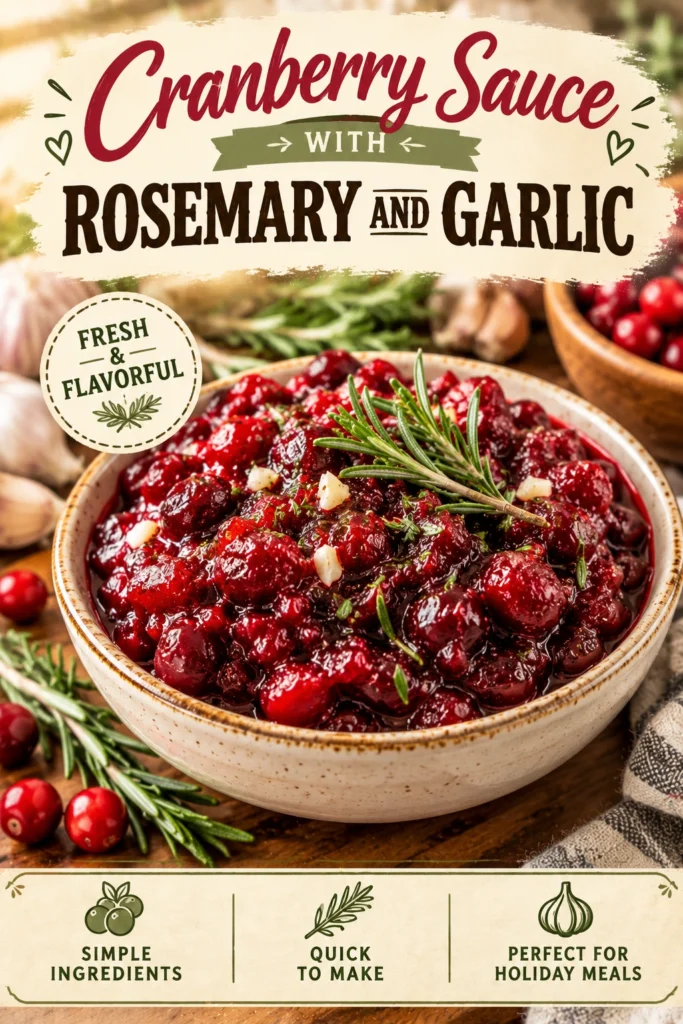
Adding a savory element to a traditionally sweet condiment transforms the entire flavor profile of a holiday meal.
This Cranberry Sauce with Rosemary and Garlic replaces excessive sugar with aromatic herbs and pungent garlic.
Home cooks appreciate this version because it cuts through the richness of heavy meats without tasting like a dessert.
The distinguishing feature of this recipe is the slow infusion of fresh rosemary, which provides a woody depth missing from canned versions.
Store-bought sauces often rely on high-fructose corn syrup, whereas this fresh version highlights the natural tartness of the berry.
Anyone looking to elevate their side dish game or introduce a more mature flavor palette to their guests will find this ideal.
The following guide details how to balance these bold flavors for a polished result.
- ●Why You’ll Love This Recipe
- ●A Brief Background on the Flavor Profile
- ●Perfect For Festive Holiday Gatherings
- ●Main Ingredient Spotlight: Fresh Cranberries
- ●Secondary Ingredient Spotlight: Rosemary and Garlic
- ●Key Ingredients
- ●How to Make It
- ●Pro Tips
- ●Delicious Variations
- ●Best Ways to Serve
- ●Storage and Leftovers
- ●Frequently Asked Questions
- ●Why This Recipe Belongs in Your Weekly Rotation
- ●Final Thoughts
This condiment bridges the gap between a preserve and a savory relish, making it versatile for various proteins.
- ●Balanced tartness that cleanses the palate between bites of rich food.
- ●Simple ingredient list requiring only a few pantry staples.
- ●Quick cooking time that doesn’t tie up the oven on busy days.
- ●Natural pectin in the berries creates a thick texture without cornstarch.
- ●Aromatic garlic adds a layer of complexity often ignored in fruit sauces.
- ●Fresh rosemary provides a sophisticated, earthy scent.
- ●Low sugar content compared to traditional cranberry recipes.
- ●Beautiful deep red color that brightens up a dinner plate.
- ●Easy to scale up for large crowds or small family meals.
Integrating these elements creates a side dish that feels gourmet but remains accessible for any skill level.
A Brief Background on the Flavor Profile |
Traditional cranberry sauce is often treated as a sweet jam. focus toward savory notes, the sauce becomes a functional accompaniment that enhances the primary meat of the meal.
Garlic and rosemary are classic pairings for roasted poultry and pork. Including them in the sauce creates a cohesive flavor bridge between the side dish and the main course, similar to the aromatics used in Slow Cooker Carnitas With Rosemary And Garlic Easy Pork Carnitas Recipe
The acidity of the cranberry acts as a foil to the pungent garlic, ensuring neither flavor overpowers the other.
This combination results in a sophisticated condiment that appeals to those who prefer savory over sweet.
Perfect For Festive Holiday Gatherings |
Holiday tables are often crowded with heavy, creamy, and buttery dishes. This sauce provides the necessary acidity to balance those flavors, acting as a palate cleanser.
Meal prep is simple since the sauce can be made days in advance. It stores well and the flavors actually improve as the rosemary infuses further into the berries during refrigeration.
Family dinners benefit from this recipe because it is a crowd-pleaser that offers a twist on a familiar classic. It pairs exceptionally well with roast turkey, ham, or even a roasted cauliflower steak for vegetarians.
Main Ingredient Spotlight: Fresh Cranberries |
Fresh cranberries are the backbone of this recipe, providing the essential structure and tartness. Unlike frozen berries, fresh cranberries have a firm skin that pops during the simmering process, releasing natural pectin that thickens the sauce automatically.
Their high acidity levels are what make the savory additions of garlic and rosemary work so well. Without this sharp base, the herbal notes would feel out of place.
Secondary Ingredient Spotlight: Rosemary and Garlic |
Fresh rosemary brings a piney, woody aroma that transforms the sauce from a simple fruit compote into a savory relish. Using fresh needles rather than dried ensures a bright, clean taste.
Garlic provides a pungent, earthy undertone. When simmered slowly with the berries, the raw bite of the garlic mellows into a sweet, aromatic warmth that complements the tartness of the fruit.
Together, these two ingredients mirror the savory profiles found in dishes like Savory Rosemary Garlic White Bean Soup Recipe, bringing a cohesive herbal quality to the table.
Key Ingredients |
Each component plays a specific role in balancing the sweet, sour, and savory notes of the final sauce.
- ●Fresh Cranberries — Provide the tart base and natural thickening agent.
- ●Fresh Rosemary — Adds a woody, aromatic depth to the sauce.
- ●Garlic — Introduces a savory, pungent warmth.
- ●Brown Sugar — Mellows the sharp acidity of the berries without making the sauce candy-sweet.
- ●Orange Zest — Adds a bright, citrusy top note to lift the heavier herbal flavors.
- ●Orange Juice — Provides the liquid base for simmering and a hint of sweetness.
- ●Salt — Enhances all the other flavors and balances the fruit’s natural tartness.
How to Make It |
Follow these steps to ensure the berries break down properly and the aromatics are fully integrated.
- Sauté the aromatics: Heat a small amount of oil or butter in a saucepan over medium heat. Add the minced garlic and chopped rosemary, stirring for about 60 seconds until fragrant but not browned. Burning the garlic will make the sauce taste bitter, so keep the heat moderate.
- Deglaze with juice: Pour in the orange juice and bring the mixture to a gentle simmer. This step allows the rosemary and garlic to infuse into the liquid before the berries are added. Avoid boiling the juice rapidly, as you want a steady infusion of flavor.
- Add cranberries and sugar: Stir in the fresh cranberries and brown sugar. Mix well to ensure the sugar is evenly distributed among the berries. If the sugar clumps, the sauce may have inconsistent sweetness.
- Simmer the berries: Lower the heat to medium-low and let the mixture simmer for 10 to 15 minutes. You will hear the berries “pop” as they burst, and the liquid will begin to thicken into a syrupy consistency. Stir occasionally to prevent the sugar from scorching on the bottom of the pan.
- Incorporate citrus zest: Stir in the orange zest during the final two minutes of cooking. Adding the zest too early can cause the citrus oils to evaporate, losing that bright, fresh scent. The sauce should now have a glossy, deep red appearance.
- Season and cool: Remove the pan from the heat and stir in the salt. Taste the sauce and add a pinch more salt if the tartness is too overwhelming. Let the sauce cool in the pan for 10 minutes before transferring it to a bowl, as it will continue to thicken as it cools.
1Refining your technique can result in a more professional texture and a more balanced flavor.
- ●2Use a heavy-bottomed pot: This prevents the sugar from hot-spotting and burning, which can ruin the delicate flavor of the rosemary.
- ●3Finely mince the rosemary: Large needles can be unpleasant to chew; chopping them into tiny pieces ensures an even distribution of flavor.
- ●4Don’t overcook: Stop simmering once the berries have mostly burst. Overcooking leads to a mushy texture rather than a chunky, jam-like consistency.
- ●5Chill before serving: This sauce tastes best when cold or at room temperature, as the flavors meld and the thickness stabilizes.
- ●6Strain the zest: Use a microplane for the orange zest to avoid including any bitter white pith in the mixture.
Delicious Variations |
Depending on the meat you are serving, you can tweak the ingredients to better suit the meal.
- ●Spicy Twist: Add a pinch of crushed red pepper flakes during the garlic sauté for a subtle heat.
- ●Maple Infusion: Replace the brown sugar with pure maple syrup for a deeper, more autumnal sweetness.
- ●Apple Addition: Stir in half a cup of finely diced Granny Smith apples for extra texture and a different kind of tartness.
- ●Balsamic Glaze: Stir in a tablespoon of balsamic vinegar at the end to add a rich, tangy acidity.
- ●Sage Swap: Use a combination of rosemary and fresh sage to create an even more traditional savory herb profile.
These changes allow you to customize the sauce based on whether you are serving it with pork, poultry, or as part of a cheese board.
Best Ways to Serve |
While this is a classic side, its savory profile makes it an excellent accompaniment to several different dishes.
- ●Spoon it over roasted turkey or cornish hens to cut through the savory skin.
- ●Use it as a glaze for pork tenderloin or served alongside Slow Cooker Pulled Pork With Rosemary And Garlic Easy Crockpot Pork Shoulder
- ●Dollop it onto a wedge of brie or camembert cheese for a sophisticated appetizer.
- ●Mix a small amount into a goat cheese spread for a tart and creamy crostini topping.
For a formal presentation, serve the sauce in a chilled crystal bowl garnished with a single sprig of fresh rosemary.
If serving with a meal that already has strong herbal notes, such as Amazing Cajun Chicken Tortellini With Creamy Garlic Sauce Quick Comfort, keep the sauce on the side to allow guests to control the flavor balance.
Storage and Leftovers |
Refrigerating
Store the sauce in an airtight glass container in the refrigerator for up to 10 days. The flavors will deepen over time, making the second and third days the most flavorful.
Reheating
Warm the sauce in a small saucepan over low heat with a teaspoon of water to loosen the consistency. Avoid microwaving on high, as the sugar can bubble over and create hot spots.
Freezing
Freeze the sauce in freezer-safe containers for up to 3 months. Thaw it in the refrigerator overnight before reheating gently on the stove.
Frequently Asked Questions |
- ●Q: Can I use dried rosemary instead of fresh?A: While you can use dried rosemary, the flavor is much more intense and less floral than fresh. If substituting, use only one-third of the amount called for in the recipe and crush the needles slightly with your fingers to release the oils.
- ●Q: Do I need to peel the cranberries first?A: No, you do not need to peel cranberries. The skins are thin and contain the natural pectin required to thicken the sauce. Rinsing them under cold water to remove any debris is the only preparation necessary before adding them to the pan.
- ●Q: Why is my sauce too thin?A: If the sauce is too thin, you likely didn’t simmer it long enough for the berries to burst and release their pectin. Continue simmering on medium-low for another 5 minutes, or let it cool completely, as it thickens significantly during the cooling process.
- ●Q: Can I make this recipe without sugar?A: You can replace the brown sugar with a sugar substitute or a small amount of honey. However, some sugar is necessary to balance the extreme tartness of the cranberries; without it, the sauce may be too acidic for most palates.
- ●Q: How do I prevent the garlic from tasting too strong?A: Sautéing the garlic gently in oil or butter before adding the liquids mellows the sharp, raw flavor. If you prefer a very mild taste, you can use roasted garlic cloves mashed into a paste instead of fresh minced garlic.
Why This Recipe Belongs in Your Weekly Rotation |
Having a versatile, savory-sweet condiment in the fridge simplifies the process of elevating basic proteins. This sauce transforms a simple roasted chicken or a piece of grilled pork into a restaurant-quality meal with minimal effort.
The use of fresh herbs and garlic makes it feel healthier than processed alternatives. It provides a burst of antioxidants from the berries and the aromatic benefits of rosemary.
Because it takes less than 30 minutes to prepare, it is a low-stress addition to any dinner menu. Once you move away from overly sweet sauces, the savory balance of this recipe becomes an essential part of a well-rounded kitchen.
Final Thoughts |
This Cranberry Sauce with Rosemary and Garlic offers a sophisticated blend of tart berries, earthy herbs, and warm garlic. It is a simple yet effective way to upgrade a traditional side dish into something truly memorable.
Home cooks should try this version to experience how a few savory additions can balance a fruit-based sauce. It is the perfect accompaniment for holiday feasts or an unexpected weekday treat.
Gather your fresh berries and aromatics to bring this bold, savory twist to your next dinner table.

Savory Cranberry Sauce with Rosemary and Garlic
- Prep Time: 10 minutes
- Cook Time: 20 minutes
- Total Time: 30 minutes
- Yield: 4 servings 1x
- Category: Side Dish
- Method: Simmering
- Cuisine: American
Description
A sophisticated, savory version of cranberry sauce featuring fresh rosemary and minced garlic to balance the natural tartness of the berries.
Ingredients
- 12 oz fresh cranberries
- 3/4 cup orange juice
- 1/3 cup brown sugar
- 1 tbsp fresh rosemary, finely chopped
- 2 cloves garlic, minced
- 1 tsp orange zest
- 1/2 tsp salt
- 1 tbsp unsalted butter
Instructions
- Melt butter in a medium saucepan over medium heat.
- Add minced garlic and chopped rosemary, sautéing for 60 seconds until fragrant.
- Pour in the orange juice and bring to a gentle simmer.
- Stir in the fresh cranberries and brown sugar, mixing until the sugar is dissolved.
- Simmer for 10-15 minutes, stirring occasionally, until the berries burst and the sauce thickens.
- Remove from heat and stir in the orange zest and salt.
- Allow the sauce to cool for 10 minutes before serving or storing.